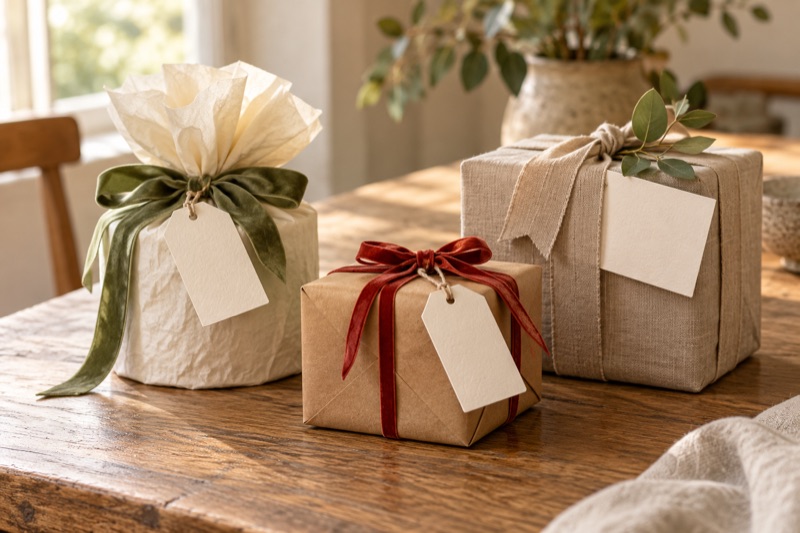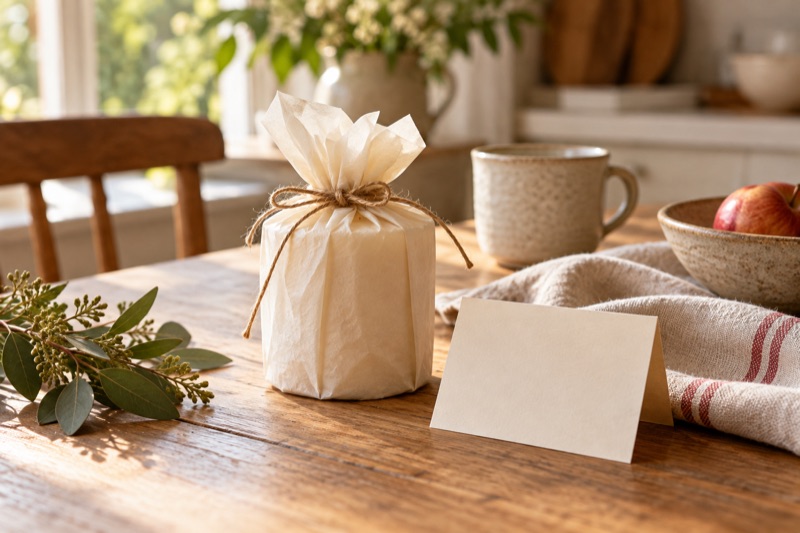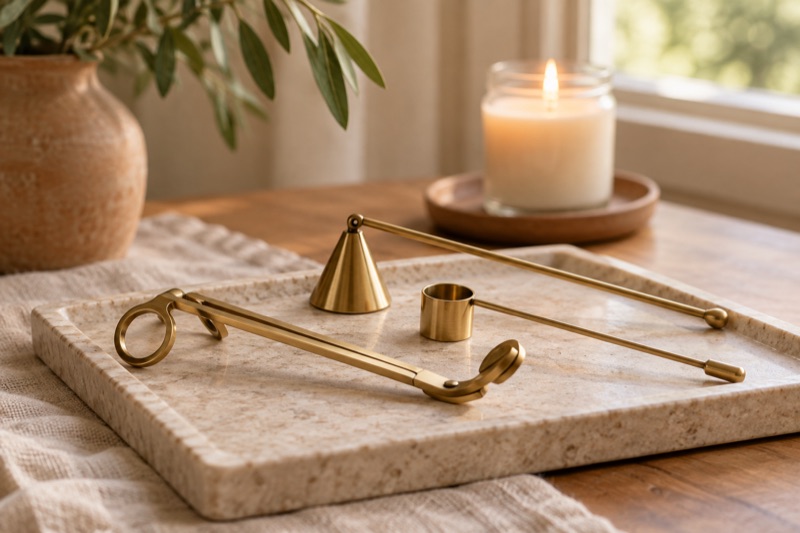
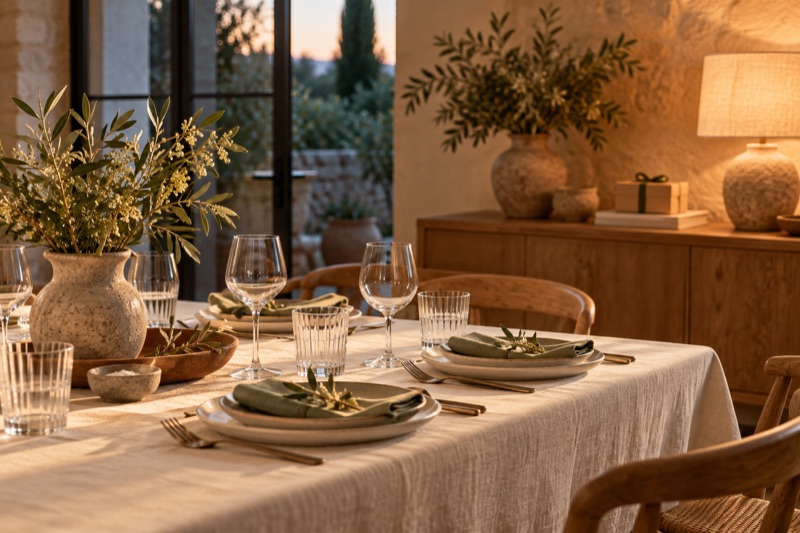
Bring something your host can put aside and enjoy later: a box from a good chocolatier, a bottle meant for another evening, a specialty from where you live, or a small object for the home. In France, the two standbys of American hosting, wine and cut flowers, can both misfire. The host has usually chosen the wine to go with the food, and an unwrapped bouquet sends them looking for a vase just as guests arrive.
None of this is law, and plenty of French hosts will happily take a bottle at the door. But the reasoning behind each custom points to a better gift, so it's worth knowing.
The etiquette
Arriving with nothing is the one real mistake. As The Local, an English-language news site in France, puts it, it isn't usual to turn up les mains vides, empty-handed, when you've been invited to someone's home.
What you bring matters less than what it asks of the host. A dinner at home in France is planned as a whole. UNESCO, which added the gastronomic meal of the French to its intangible cultural heritage list in 2010, names the pairing of food with wine and the setting of a beautiful table among its important elements. A gift that has to be opened, served or arranged during the evening cuts across that plan. A gift that can wait doesn't.
Writing for Apartment Therapy, Dana McMahan, drawing on her time in Paris, sums up the rule: bring "something your host can enjoy on their own time."
Two smaller habits help. Ask ahead whether you can bring anything; The Local calls asking the best practice. And don't arrive early. A 2007 Condé Nast Traveler guide to being a dinner guest in France, republished by NBC News, put the ideal at fifteen minutes late.
Why not wine?
Wine is the gift most likely to go wrong, and the quality of the bottle has nothing to do with it. The host has usually chosen the wines to match each course. A bottle handed over at the door can read as a suggestion that they haven't, or that their choice could use help. McMahan's summary of the French view: "you don't trust them to have the wine sorted." Connexion, the English-language newspaper in France, gives the same reason: the host will already have planned the pairings.
How much this matters depends on the host. The Local notes that the custom is strongest among older, better-off and more socially conservative hosts, while younger French people increasingly bring wine, and a bottle is the norm at a student party.
If you want to bring a bottle, choose one that sits outside the meal:
- Champagne or crémant. McMahan has never known anyone to turn down Champagne, and The Local lists sparkling wine as an exception.
- A dessert wine. The Local suggests a Monbazillac or a Sauternes, which won't be taken as a comment on the host's pairings.
- A liqueur. A good one can be served as an apéritif or a digestif on another evening.
Hand it over as a gift for later, and don't expect to see it opened. The Local advises that many hosts will already have planned what they're pouring.
Why not cut flowers?
Flowers are welcome in France. The trouble is the timing. A bouquet handed over at the door arrives just as the host is busiest, and it brings a small job with it: unwrap, trim, find a vase, find a place for the vase. McMahan adds that the table has usually been set with its own centerpiece already.
The French answer is to send them. Connexion notes that some guests have flowers delivered before the dinner or afterward, so the host never has to leave the table to arrange them. Sent ahead, they can go on the table that evening. Sent the next day, with a card, they double as your thank-you.
If you'd rather bring something in person, choose something that needs no attention. McMahan suggests flowers already arranged in their own vase. Connexion and The Local both suggest a potted plant.
Leave out the chrysanthemums
In France, the chrysanthemum belongs to the cemetery. Larousse defines it as an autumn ornamental plant widely used in gardens and to decorate graves at Toussaint, All Saints' Day. The City of Paris traces the association to November 11, 1919, when President Raymond Poincaré called for every war memorial in France to be decorated with flowers. Chrysanthemums were in full bloom, so chrysanthemums were chosen. They still made up 60% of the plants French households bought for Toussaint in 2023, according to the same page.
Brought to a dinner, they read as a funeral flower. The Local puts lilies in the same category.
Count the stems
Some people in France still keep an old custom of giving an odd number of flowers. The Local presents it as a belief about luck that some people hold. Connexion adds the exception: never 13. Most hosts won't count, but if you're ordering from a florist, ask for an odd number and the question never comes up.
What to bring instead
The best host gifts in France have three things in common. They keep, they ask nothing of the host that evening, and they say something about you or about the person you're thanking.
| Gift | Why it works | Keep in mind |
|---|---|---|
| Chocolates from a chocolatier | The safe choice, and they keep | Skip the supermarket box |
| Champagne, a dessert wine or a liqueur | Sits outside the meal's wine pairings | Present it as a gift for another day |
| A specialty from where you live | Personal, and it tells your story | Jam, honey or olive oil all travel well |
| A book | Chosen for the host, it lasts | Pick for their interests, not yours |
| A plant, or flowers sent ahead | No vase to find at the door | No chrysanthemums |
| An object for the home | Outlasts the evening | Choose one that needs no setup |
Chocolates are the classic answer. The Local and Connexion both name them, Connexion specifies a small box of artisan chocolates from a chocolatier, and Condé Nast Traveler called sweets a safe bet. Most French cities have several good chocolatiers to choose from.
Dessert is a special case. If you know the hosts well, The Local suggests offering in advance to pick one up from the pâtisserie. If you don't, a box of macarons is the classic alternative, and it won't compete with whatever is already planned.
A specialty from home is a good choice for a visitor. McMahan suggests artisanal jam, local honey or an interesting olive oil. A book chosen for the host's interests is her own habit.
An object for the home is the other way to bring something that lasts. It should be ready the moment it's unwrapped, with nothing to plug in, fill or light. Le Bonne Pomme fits that description: a sculptural apple of hand-poured soy and beeswax, hand-painted one by one and presented under a handblown glass cloche. Displayed under its cloche, it scents a room without being lit, for about 60 days, depending on room size. Its fragrance, by Mane, the French fragrance house founded in 1871, opens on crisp apple skin, melon and peach and settles on caramel, musk and wood. It's designed in France, and Une Pomme was $42 when we checked in October 2026.
For more host gifts in that range, see Small Luxury Gifts Under $50. If the dinner is also a housewarming, Housewarming Gifts for Someone Who Has Everything covers gifts that don't add clutter. And if your host is a client or a colleague, the same logic applies to client gifts that don't end up in a drawer.
The thank-you
The evening isn't quite over when you leave. Connexion recommends a handwritten thank-you note within a few days, and notes that you may then be invited in turn, for drinks or a meal, in the months that follow.
Make the note specific. Name a dish, the wine they poured, a conversation you enjoyed. If you didn't send flowers before the dinner, this is the moment for them: delivered the next day with a card, they arrive when the host has time to enjoy them.
Through all of it, one rule holds: let the host be the host. A gift that waits for them, whether chocolates for the week, a bottle for another dinner or an apple on the shelf that keeps scenting the room, says thank you without adding to the evening's work.
FAQ
Is it rude to bring wine to a dinner party in France? Not rude, but it can be awkward. The host has usually chosen wines for the meal, so your bottle may go unopened. Champagne, a dessert wine or a liqueur, given for another occasion, avoids the problem. Younger hosts are often more relaxed about it.
Can I bring flowers to a French dinner party? Yes, but it's more considerate to have them delivered before the dinner or afterward, or to bring flowers already arranged in a vase. Avoid chrysanthemums.
Why are chrysanthemums a bad gift in France? They're the traditional flower for decorating graves at Toussaint, All Saints' Day, so they suggest mourning.
Do I have to bring something? Yes. It isn't usual to arrive empty-handed. Something small and good, such as chocolates from a chocolatier, is enough.
How do I thank a French host? Send a handwritten note within a few days. Flowers delivered the next day, with a card, also work.