The short answer
Some should, and some shouldn't. If a decorative candle has a centered wick, a safety label and burn instructions, it was made to burn, and lighting it is how you enjoy it. If it's carved, sculpted or painted, or sold for display, leave it unlit: a flame destroys the form and finish you paid for, and some finishes don't belong near a flame at all.
Here is how to tell which kind you have, and how to enjoy one you don't light.
Candles made to burn, and candles made to keep
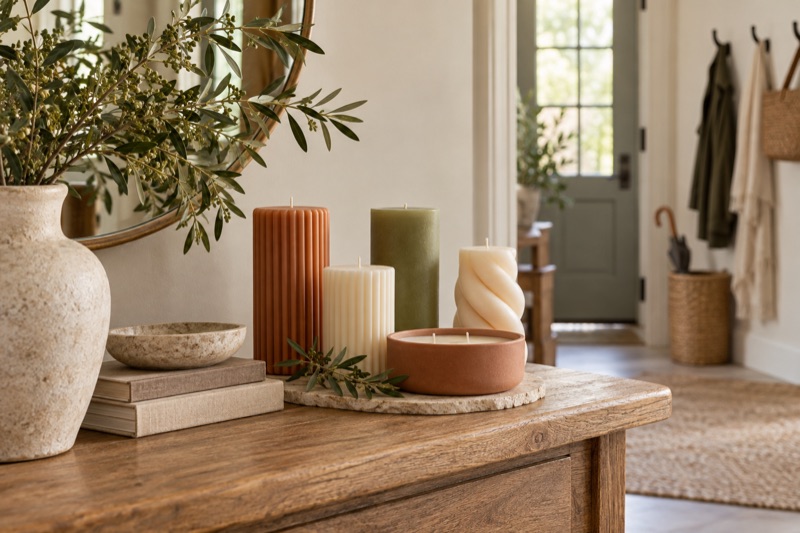
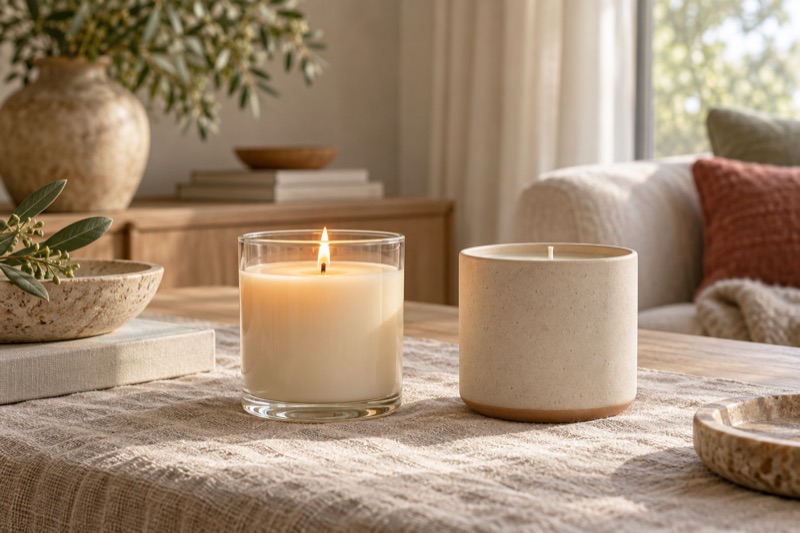
A candle made to burn is built around its flame. The National Candle Association notes that manufacturers choose a wick of the right size, shape and material for each candle's wax and dimensions. The wax sits evenly around the wick so it melts evenly. Pillars, tapers, votives and container candles belong here. Any decoration usually comes from the color of the wax or the vessel it's poured into.
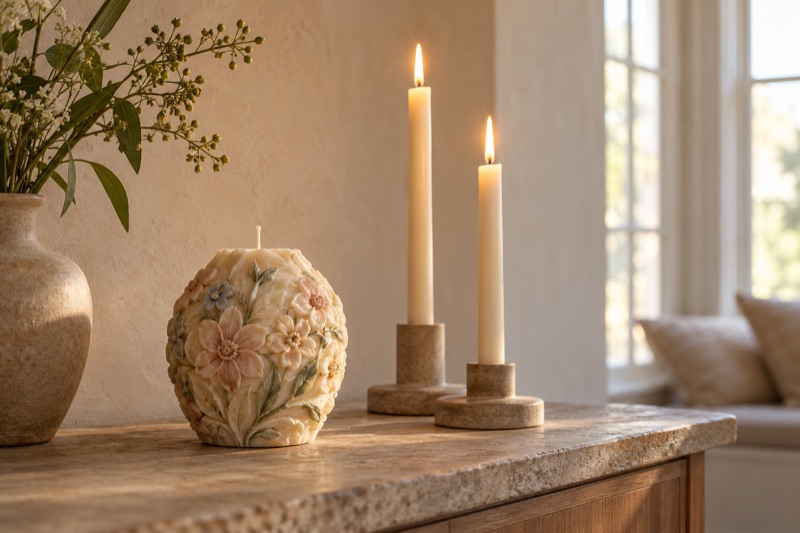
A candle made to keep puts the form first. These are the decorative candles not meant to be lit: carved candles, wax busts, figural and fruit-shaped pieces and hand-painted candles, all objects that happen to be made of wax. Their value is in the surface: a carved spiral, a modeled profile, the blush on a painted apple. Many have wicks anyway, which is where the confusion starts.
The maker usually tells you which kind you have. Cire Trudon, the French candlemaker, lists its wax busts of Marie-Antoinette and Napoléon under interior and decoration, not with its candles. A product page that leads with styling instead of burn time is telling you the same thing.
So are candles decor? Some are, and nothing more. One that is never lit is still doing its job, provided it was made for that job.
What happens when you light a painted or sculptural candle
A flame melts wax outward from the wick into a pool. In a pillar, that pool sits inside walls of the same wax and burns down evenly. In a sculpted piece the wax isn't spread evenly around the wick. Thin edges and raised details soften first, and an uneven mass can melt through on one side and run. A carved candle loses its carving from the top down, and a modeled figure loses its face.
A painted surface has a problem of its own. Paint isn't wax, and the wick wasn't sized with it in mind. As the wax underneath softens, the finish slumps, smears or slides into the pool. Some exterior coatings can also catch fire. In 2008 the US Consumer Product Safety Commission announced a recall of about 185,000 decorative candles after two reports of the gold paint on their exteriors igniting. When a maker says a candle is for display, believe them.
Le Bonne Pomme shows what a piece designed to be kept looks like. It is a sculptural apple of hand-poured soy and beeswax, hand-painted one by one and presented under a handblown glass cloche, and it is designed to scent a room without being lit. It can be lit, but it isn't meant to be: the painted finish will melt and the wax may drip. That isn't a defect. It is what happens when a painted object meets a flame.
When it's fine to light a decorative candle
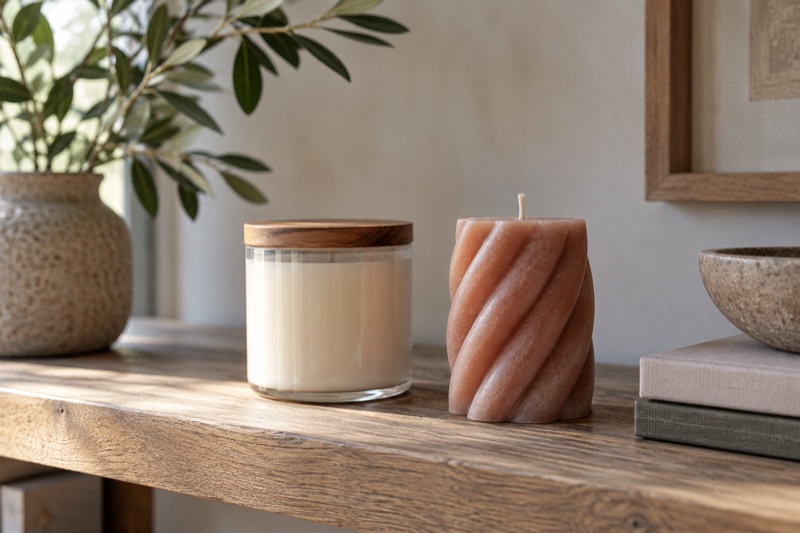
Plenty of decorative candles are good candles too. Colored tapers, sculpted pillars with a centered wick and candles poured into decorative vessels are all made to be lit, and many look their best that way. Before you light one, check five things:
- The label. The National Candle Association says every candle should carry a cautionary label and that a missing one may mean the candle doesn't meet safety standards. Burn instructions mean the maker expects you to burn it. "Decorative use only" or "not for burning" means it doesn't.
- The wick. It should be a real, centered wick that you can trim to 1/4 inch, as the NCA recommends before every burn, with the bulk of the wax evenly around it.
- The surface. Paint, lacquer, glitter, metal leaf and embedded objects such as dried flowers or ornaments don't belong near a flame. One candle recalled in 2025 had decorative ornaments that were flammable, according to the CPSC. If the decoration covers the top or sits close to the wick, don't light it.
- The shape. Thin, projecting or lopsided forms drip and can collapse. If you light one at all, stand it on a heat-resistant plate and watch it.
- How much you care about the form. Even a candle that is safe to burn loses its carving or modeling as it goes. If you bought it for the shape, lighting it uses the shape up.
If you do light it, the usual rules apply. Keep it at least 12 inches from anything that can catch fire, stand it on a stable, heat-resistant surface, keep it away from drafts, and never leave it burning unattended.
How to enjoy an unlit candle's scent
A candle you don't light can still scent a room. Candlemakers call the scent a candle gives off before it is burned its cold throw, and the scent while it burns its hot throw. Our guide to cold throw vs hot throw explains how the two differ and why some candles are much stronger one way than the other.
- Choose a piece made to be smelled unlit. Many candles are built mainly for hot throw and smell faint until lit. A piece designed for cold diffusion is built the other way around.
- Put it where you'll notice it. Unlit scent is easier to notice in a smaller space: a bedside table, a powder room, an entry hall. Le Bonne Pomme scents a room for about 60 days, depending on room size.
- Keep it cool and out of the sun. Heat softens wax. Even a common soy container wax is, in one supplier's words, "a little too soft for the summer heat". Keep a sculptural or painted piece away from direct sunlight, radiators, stoves and fireplaces.
- Cover it. A lid or glass cloche keeps dust off a carved or painted surface, which is much harder to clean than a plain one.
- Expect it to fade. Unlit scent tapers off over weeks and months. How long unlit candles last covers what to expect.
For the wider category, from scented wax objects to candles designed for cold throw, see Candles That Scent a Room Without Being Lit.
FAQ
Can decorative candles be lit? Many can. A centered wick, a safety label and burn instructions mean it was made to burn. If it is painted, carved, embellished or sold for display, leave it unlit.
Are decorative candles meant to be lit? It depends on the maker's intent, and the product page or label usually says. If the only guidance is about where to display it, treat it as an object, not a candle.
Is it a waste never to light a candle? Not if it was made to be kept. A sculptural candle is an object first, and a scented one keeps working unlit through its cold throw.
Does an unlit candle still smell? Yes, though how much varies. Candles formulated mainly for burning can smell faint unlit, while pieces designed for cold diffusion are made to scent a room without a flame.
What should I do if a decorative candle has a wick but no instructions? Ask the maker or seller before you light it. If you can't find out, assume it's for display, especially if it is painted, coated or embellished.