The best apple decor ideas are the simplest. Use a low bowl of real apples in autumn, one or two ceramic or glass apples that can stay out all year, and a single wax apple where you want scent. Choose one kind of apple per surface, give it room, and leave out the gingham, the signs and the apple-print tea towels. Below is how to make each kind last, and where it looks best: on the table, in the kitchen and on the mantel.
Real apples, styled
October is the month for real apples, so start there. Choose fruit that keeps. Clemson Cooperative Extension notes that thicker-skinned, harder apples keep longer, and that softer-skinned Gala and Golden Delicious may last only a few weeks even in ideal storage.
On a counter, every apple is on a clock. The University of Maine's extension guide warns that apples soften and turn mealy at room temperature, and that keeping them good for more than a week takes refrigeration. So treat a display bowl as a weekly arrangement: eat from it, and top it up from the fridge. When you do, take out anything spotted or bruised. Clemson notes that breakdown in one apple spreads to the apples touching it.
| If you want | Choose | Why |
|---|---|---|
| A bowl that lasts the week | Fuji, Pink Lady, Rome | Thicker skin and harder flesh keep longer (Clemson) |
| Apples that get handled | Empire | Resists bruising (Cornell) |
| Sliced apples on a board | Cortland | Slow to brown (Cornell) |
| Eating, not display | Gala, Golden Delicious, McIntosh | Gala and Golden Delicious keep only weeks; McIntosh gives off large amounts of ethylene (UMaine) |
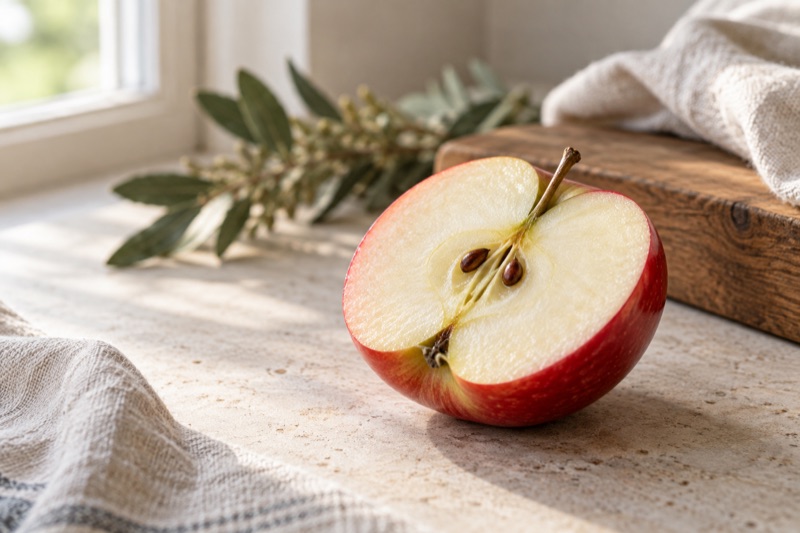
Sliced apples brown because cutting lets oxygen in, and an enzyme in the fruit, polyphenol oxidase, darkens the flesh. A food scientist writing in Scientific American suggests coating slices in lemon juice to slow it. Cut them at the last minute, and expect a slice to hold its color for less time than a whole apple holds its shine. Cornell's alumni magazine notes that Jonamac can oxidize within ten minutes of slicing.
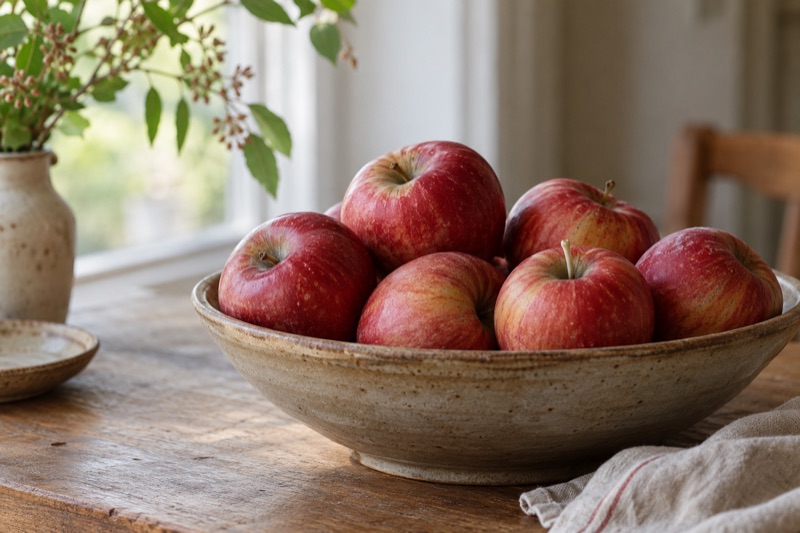
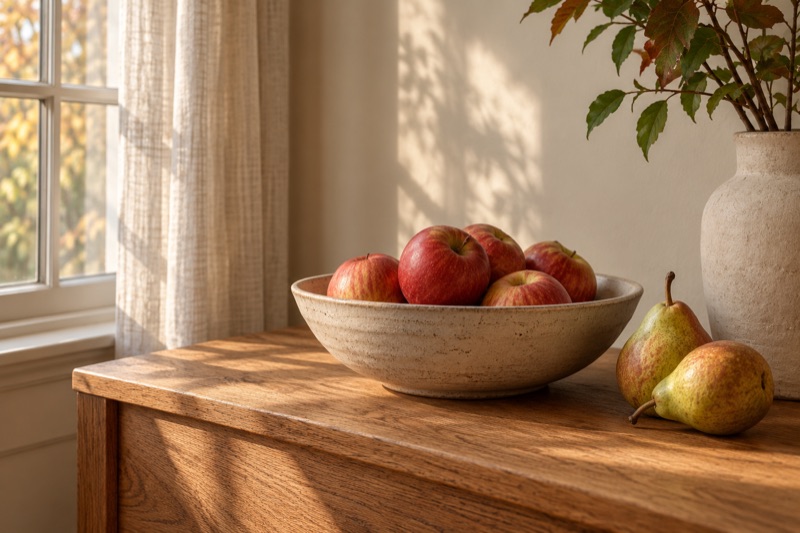
As for the look: one low, wide bowl or a shallow wooden crate, one variety or two at most, and a few apples with stems and leaves if the orchard will give you some. Let the fruit sit just above the rim rather than heaping it. Leave out the plastic leaves and the raffia; the apples are the decoration.
Mind the neighbors
Ripening apples give off ethylene, a gas that, as UC Cooperative Extension explains, speeds ripening in the fruit and in the fruit around it. Penn State researchers count apples among the biggest ethylene producers, and note that leafy vegetables exposed to it turn yellow and limp, and carrots turn bitter. Cut flowers are sensitive too: ethylene speeds their aging, down to discolored and dropping petals.
Three habits follow. Keep the apple bowl away from the vegetable basket. Keep apples and fresh flowers in separate arrangements, not tucked in together. And keep the bowl cool and uncovered, which UC Cooperative Extension suggests for slowing ripening.
Ceramic and glass apples
Real apples last a week on the counter. Ceramic and glass ones carry the idea through the rest of the year, and they're an old one. The Metropolitan Museum of Art holds a group of six tin-glazed earthenware fruits made around 1750–75.
- Buy one or three, not a set of twelve. A single good ceramic apple reads as an object. A dozen reads as a collection, and needs a cabinet.
- Choose the finish for the room. A matte or crackle glaze sits closest to real fruit; high gloss looks more like an ornament.
- Give glass apples light. Set a clear or green one on a windowsill or near a lamp, where it catches the light, and back from the edge.
- Mix them in. One ceramic apple in a bowl of real ones is a quiet joke that outlasts the fruit.
- Edit the vintage. One vintage apple canister reads as a find; the matching cookie jar, salt shakers and wall clock read as a theme.
Wax and scented apples
Wax fruit has a long history as decoration. The Victorians made a pastime of modeling fruit and flowers in wax and displaying them under glass domes. For the longer story, see Fruit-Shaped Candles: A Guide to Wax Fruit, Old and New.
Today's wax apples range from painted decorative candles to scented pieces made to be displayed rather than burned. Our Le Bonne Pomme is one of the latter: a hand-poured soy and beeswax apple, hand-painted one by one and presented under a handblown glass cloche. Displayed under its cloche, it scents a room without being lit, for about 60 days, depending on room size. Its notes run from crisp apple skin, melon and peach to rose, red berries, caramel, musk and wood. Here's what an apple candle smells like, and why it's nothing like apple pie.
Keep any wax apple out of direct sun and away from radiators, ovens and other heat. The National Candle Association notes that candles may fade in bright light over time.
Scent also changes where an apple belongs. Put a scented one where you'll notice it between meals, in an entry, on a console or a kitchen shelf, rather than in the middle of the dinner table. For more fresh, spice-free ideas, see Apple Candles Without the Cinnamon.
On the table
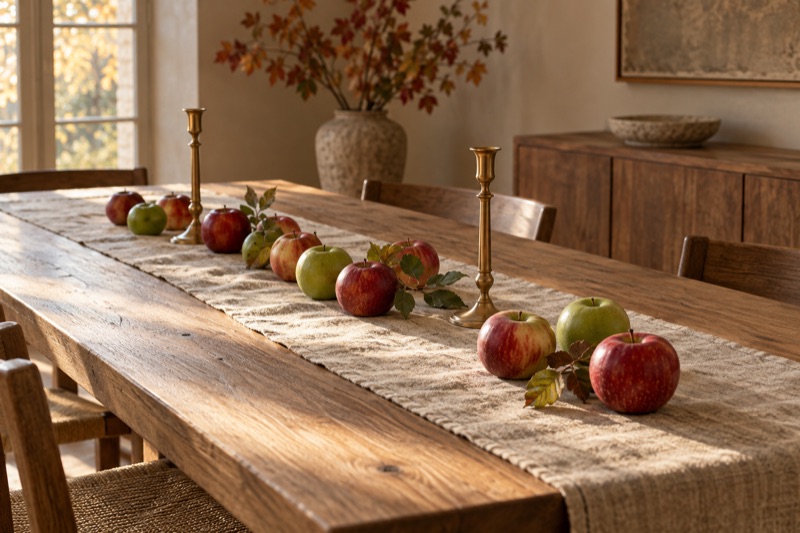
For an autumn table, run the apples down the center instead of piling them in the middle. A loose line of seven to nine on a linen runner, broken by two or three low candlesticks, keeps sightlines open. Keep everything below eye level so guests can see each other.
A branch of turning leaves adds color, but dry leaves burn. The NFPA advises keeping candles at least 1 foot from anything that can burn, so give the tapers that clearance from foliage. Choose unscented candles for the table, so nothing competes with dinner.
An apple at each place, with a name tag tied to its stem, works as a place card and a parting gift. If you want flowers too, put them in their own vessel, a little away from the fruit.
The same table works year-round with a change of fruit. In summer, try a glass bowl of green apples and nothing else; in winter, red apples with a few cuttings of evergreen.
In the kitchen
The kitchen is where apples earn their place, so make the bowl one you eat from. Keep it out of direct sun and away from the stove, and keep it apart from the vegetables.
Let the cabinets set the color. Green apples suit white or pale cabinets and green tile; red apples warm up oak and darker wood. On an open shelf, a single ceramic apple beside the cookbooks is enough.
For the walls, one botanical print of a single apple variety does more than a row of apple signs. The USDA commissioned thousands of fruit watercolors in the late 1800s and early 1900s, now held by the National Agricultural Library, and they're a good place to start looking.
On the mantel
A mantel suits apples in small numbers. Try an asymmetric group: three apples at one end, a jug of branches at the other, and bare shelf between. Mix real and ceramic, and keep to one color family.
If the fireplace is in use, move the fruit and anything made of wax elsewhere. The NFPA advises keeping anything that can burn at least three feet from a fireplace, and warmth only hurries real apples along.
Over a fireplace you don't use, or a mantel without one, try a single apple under glass, set a little off-center. Le Bonne Pomme under its cloche fits here, as long as the spot stays out of direct sun.
FAQ
Is real-apple decor worth it?
Yes, if you plan to eat it. Apples stay at their best for only about a week at room temperature, so keep a few in the fridge and rotate them into the bowl. Firm, thick-skinned varieties such as Fuji and Pink Lady hold up best.
What apple decor works in a classroom?
Put real apples on the desk for a week, then share them. Use ceramic, wooden or paper apples for the rest of the term. Keep wax apples away from radiators and sunny windows, and skip anything that needs a flame.
Red or green apples for kitchen decor?
Follow the kitchen. Green apples look fresh against white, cream and green; red apples suit wood, brass and warmer paint colors. In autumn, a mix of both in one bowl looks the most like an orchard.