Yes, putting a lid on a candle keeps the scent longer. A lid slows the evaporation that carries fragrance out of the wax, and it keeps dust off the surface. It won't preserve a candle forever, but between burns and on the shelf, a lid or a glass cloche is the simplest way to slow the fade.
The National Candle Association's own storage advice makes the same point: keep candles in a cool, dark, dry place with the lid on, both to keep dust and debris out and "to help protect the wax and fragrance".
Why candles lose scent
The fragrance in a candle is a blend. The NCA says scented candles usually combine natural and synthetic materials, drawn from more than 2,000 aroma chemicals and essential oils. That blend leaves the candle by evaporation: from the melted wax pool when the candle burns, and from the solid candle when it doesn't. The second route is why an unlit candle smells at all, and also why it slowly fades on the shelf.
Several things set the pace.
Volatility. Fragrance molecules don't all leave at once. Perfumers describe a scent in notes because molecules evaporate at different rates. The most volatile molecules carry the top notes and leave first, while heavier, less volatile ones make up the base (HKBU Department of Chemistry). An uncovered candle tends to lose its brightest notes before its deepest ones.
Moving air. Air passing over the wax carries fragrance away and replaces it with unscented air, which keeps evaporation going. The rate of airflow is one of the main factors in how fast any substance evaporates. A candle near a vent, a fan or an open window gives up its scent faster than one in still air.
Warmth and light. Evaporation speeds up as temperature rises. Light is a separate problem: the NCA advises keeping candles out of direct sun and harsh indoor lighting, and notes they may fade in bright light. A sunny windowsill is the worst spot on both counts.
Dust. Any open surface collects dust, and wax is no exception. Keeping candles clean of dust and debris is one of the NCA's reasons for keeping the lid on. The association also says plainly that you shouldn't throw candle lids away, because they help protect the candle.
Lids vs cloches
A lid and a cloche work the same way. Each holds a covered candle in a pocket of still air. Fragrance evaporates into that pocket until the air is close to saturated. At that point, molecules settle back onto the wax about as fast as they leave, a balance chemists call dynamic equilibrium. From then on, the candle mainly loses the scent that leaks around the edges.
How well a cover works comes down to two things: how snugly it fits, and how much air it has to fill. The size of a container affects how long it takes to reach equilibrium, so a small air space fills sooner.
| Lid | Cloche | |
|---|---|---|
| Fits | Container candles, sized to the vessel | Almost anything: pillars, sculptural and decorative candles, unlit scented objects |
| Air to fill | Very little | More, depending on the size of the dome |
| Seal | Usually snug | Rests on a base or tray, so usually looser |
| Shows the candle | No | Yes, through clear glass |
| When it goes on | Only after the flame is out and the wax has cooled | Only after the flame is out and the wax has cooled |
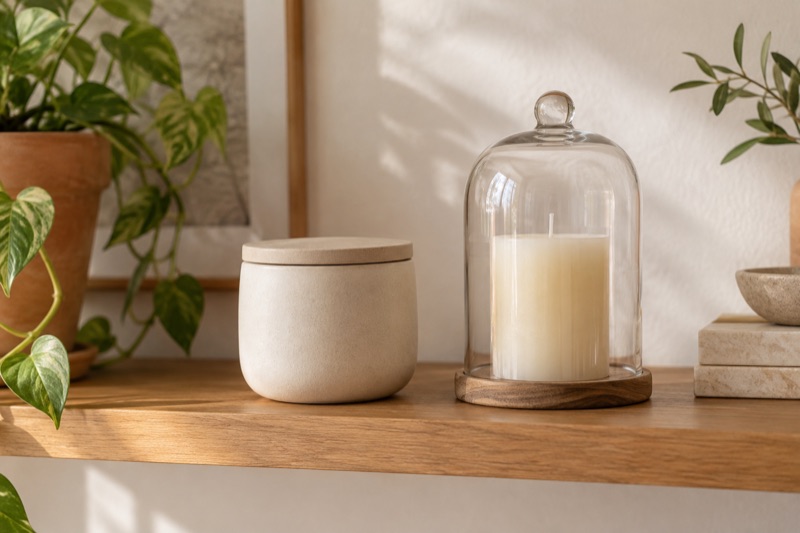
Lids. A lid made for its vessel is usually the more efficient cover, with a snug fit and very little air to fill. If your candle came with one, keep it and use it. When you're choosing among luxury candles, ones with lids are easier to keep at their best between burns.
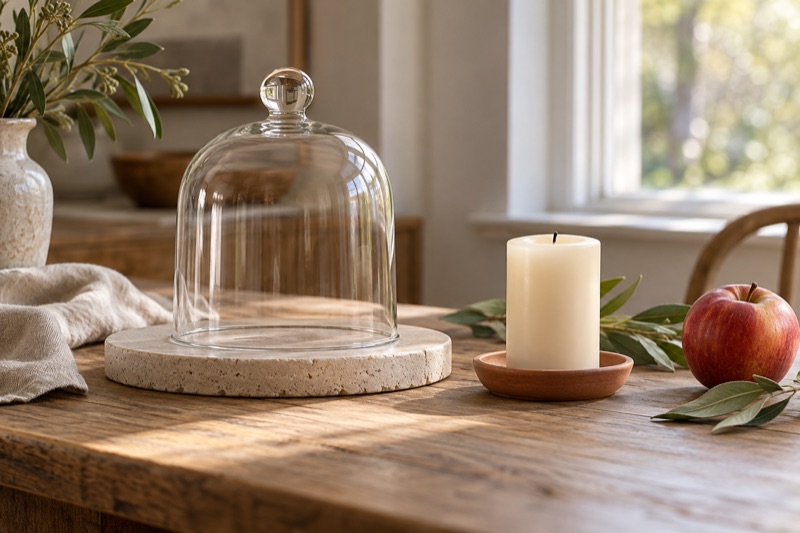
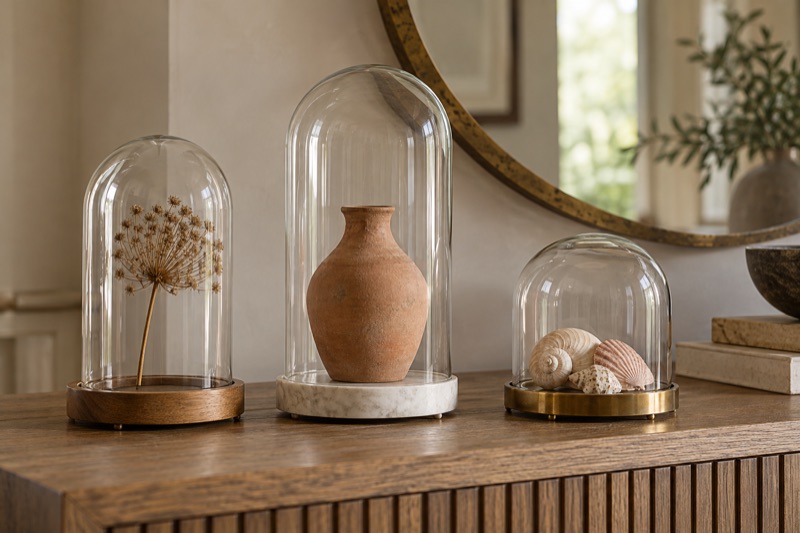
Cloches. If you're looking for decorative candles with lids, look for a cloche instead. A sculptural candle or a pillar has no vessel to cap, but a glass dome can cover it and leave it on view. Trudon, the Paris candle house, describes its dome, La Cloche, as one that "protects the candle and concentrates its perfume". It's designed to be lifted to reveal the scent.
Neither goes on a lit candle. Covering a flame starves it of air. The NCA explains that a flame with too little air flickers and gives off soot. A cover also traps the flame's heat. How to Use a Candle Cloche covers the full safety picture, along with how to lift, place and clean a cloche.
How to store candles between uses
- Put the flame out with a snuffer, not the lid. The NCA lists a snuffer first, with gently blowing the flame out as the alternative, and warns against water, which can splatter hot wax.
- Let it cool completely. The NCA advises not touching or moving a candle until the wax has fully cooled. Cover it after that.
- Cover it. Use the lid for a container candle and a cloche for everything else.
- Choose a cool, dark, dry place, as the NCA recommends: away from radiators, stovetops and sunny sills.
- Keep it out of drafts, so moving air isn't carrying fragrance off the surface.
- Store tapers flat to prevent warping, per the NCA.
- Burn your candles. The NCA puts the life span of highly fragrant candles at 6 to 12 months, depending on the scent, and suggests using and replacing them often.
For a candle you never light, the cloche becomes part of the display. Our Le Bonne Pomme is a hand-painted apple of soy and beeswax, designed to be displayed under its handblown glass cloche. There, it scents a room without being lit for about 60 days, depending on room size. Its care is the same as any candle you want to last: keep it out of direct sunlight and away from heat sources.
For more on living with glass domes, see Cloche Decor Ideas: Ways to Style a Glass Dome and What Is a Glass Cloche? Names, History and Uses.
FAQ
Can you put a candle out with its lid? No. Covering a burning candle starves the flame of air, and a flame short of air gives off soot. It also traps the flame's heat under the cover. Use a snuffer, let the wax set, then put the lid on.
Do unlit candles lose their scent? Yes, slowly. Fragrance evaporates from the solid candle as well as from melted wax, so an uncovered candle fades even if it is never lit. A lid or cloche slows that, and cool, dark storage slows it further.
Is a cloche as good as a lid? For keeping scent, a snug lid usually has the edge, because it has less air to fill and fewer gaps. A cloche suits candles and objects a lid can't fit, and ones you want to see.