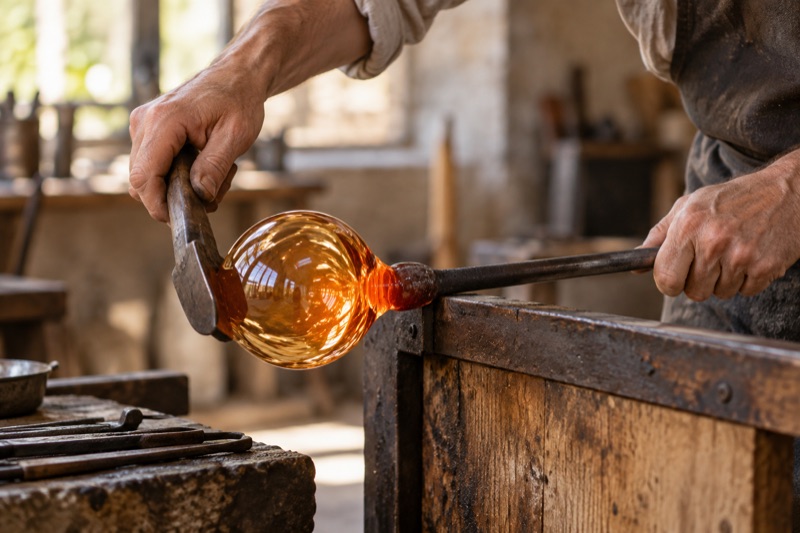
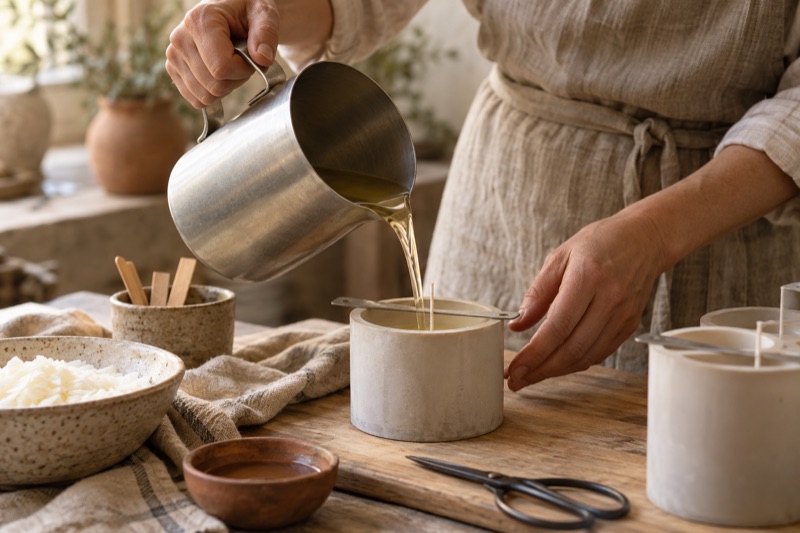
A hand-poured candle is one whose melted wax was poured into its container or mold by a person rather than by an automated filling line. That is the whole promise. It describes one step in making the candle, and on its own it says nothing about the wax, the fragrance, the quantity made or who designed it.
Candle labels are full of words like this: handmade, hand-poured, hand-painted, small-batch, artisan. Each is true about something specific, and each is easy to read as a bigger promise than it makes. Here is what each one tells you, and what it leaves out.
Why candle labels matter
These words are descriptions a brand writes about itself, not certifications awarded by someone else. In the US, the Federal Trade Commission's general standard for advertising applies: ads must be truthful and not misleading. What the words can't do is tell you how much of the candle they cover.
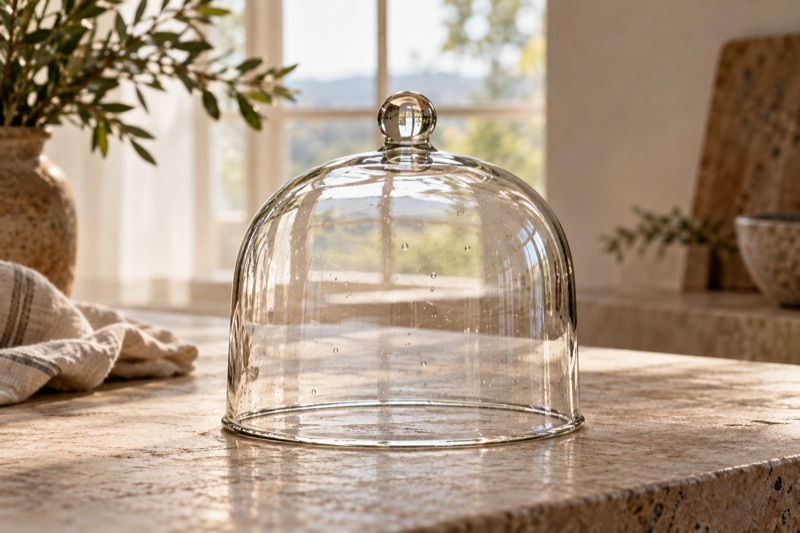
Our own label makes a fair test case. We describe Le Bonne Pomme as hand-poured soy and beeswax, hand-painted one by one, handcrafted one at a time in small runs, and presented under a handblown glass cloche. Each phrase answers a different question. None of them answers all of them.
| Label | What it tells you | What it doesn't tell you |
|---|---|---|
| Handmade | People did meaningful parts of the work by hand | Which parts, how many people, how many pieces |
| Hand-poured | A person poured the wax | What the wax is, who made the fragrance, how many in a batch |
| Hand-painted | A person applied the decoration with a brush | Who designed it, or whether it is meant to be burned |
| Small-batch | Candles are made in limited runs | How limited; the phrase sets no number |
| Artisan | The brand wants you to picture a skilled maker | On an English label, nothing specific |
Handmade
Handmade is the broadest of the five. It tells you that hands did meaningful parts of the work, but not which parts.
A candle described as handmade may still use wicks, vessels and fragrance made elsewhere by machine. The word doesn't say. What it does tell you is that a person, not only a production line, shaped the finished piece.
"Handcrafted one at a time," which is how we describe our apples, is narrower: it says each piece is made individually.
Hand-poured
Hand-poured is more precise. It names one step: melting the wax and pouring it by hand into a vessel or mold, instead of filling containers on an automated line.
Hand-poured soy candles, hand-poured beeswax candles and hand-poured scented candles all share that step. The rest of the label is what tells you about the wax and the scent.
What hand-poured doesn't promise is the composition of the wax. If a label says soy, it's fair to ask whether that means all soy or a blend, and in what proportion. Ours says soy and beeswax because the apple is a blend of the two.
It also says nothing about who composed the fragrance. Ask. Ours is by Mane, the French fragrance house founded in 1871.
Hand-painted
Hand-painted means a person applied the color or decoration with a brush, piece by piece. "Hand-painted one by one" adds that each piece is painted individually. Expect small differences from one piece to the next. That variation is the evidence of the hand.
What it doesn't promise is that the paint is meant to meet a flame. With any painted candle, ask whether it's designed to be burned. Ours isn't. Le Bonne Pomme is designed to scent a room unlit, displayed under its cloche. It can be lit, but the painted finish will melt and the wax may drip.
Small-batch
Small-batch means candles are made in limited runs rather than continuously. The phrase itself sets no number, so one maker's small batch could be a few dozen pieces and another's could be several thousand.
What it tells you is that production happens in runs, so slight differences between runs are possible. What it doesn't tell you is the size of a run. If that matters to you, ask how many pieces are in a batch. We describe ours as handcrafted one at a time, in small runs.
Artisan
On an English-language candle label, artisan describes an image more than a process: a skilled maker, a workshop, care taken. It is the brand's word for itself.
In France the word carries more weight. The title artisan d'art is reserved for people working in a craft on the official list of métiers d'art who hold a vocational diploma (a CAP or BEP) or can show at least three years' experience in that craft, according to France's industrial property office, INPI. Wax work is on that list, under the name cirier.
For more on how France recognizes and protects craft, see our guide to French savoir-faire.
Questions to ask a brand
When you're buying hand-poured candles online, the product page is the label, and you can't pick the candle up. A good brand will answer these plainly.
- Which steps are done by hand? Pouring, painting, finishing, packing: ask which ones.
- What's in the wax? If it's a blend, ask what the blend is.
- Who made the fragrance? A named fragrance house or perfumer is a specific answer you can check.
- How big is a batch? Small means different things to different makers.
- Is it meant to be burned? This matters most for painted and sculptural candles.
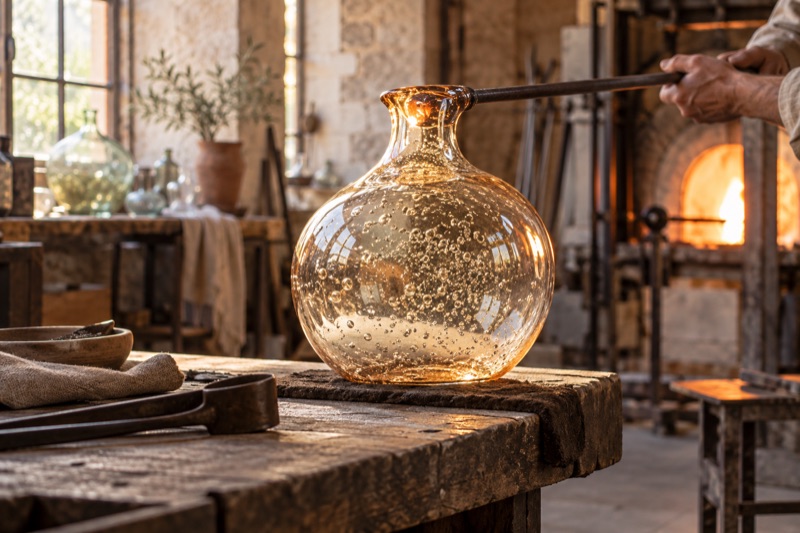
- Is the glass handblown? Handblown glass varies slightly from piece to piece. Our guide to how hand-blown glass is made explains what to look for.
- Where was it designed, and where was it made? These are separate claims. We explain the difference in designed in France versus made there.
- Is there a third-party test report? Some brands publish one. Ours, from SGS, is public.
FAQ
What does hand-poured mean on a candle? A person poured the melted wax into the container or mold, rather than an automated line doing it. It describes one step, not the whole candle.
Are hand-poured candles better? Not automatically. Hand-pouring tells you how one step was done, not how well. The wax, wick, fragrance and care in making decide the result, and you learn about those by asking and by living with the candle.
What's the difference between handmade and hand-poured? Hand-poured names one specific step. Handmade is broader: it says hands were involved somewhere, without saying where.
Does artisan mean anything on a candle label? On an English-language label, it's the brand's description of itself. In France, artisan d'art is a reserved title tied to a recognized craft and a qualification.