No. You shouldn't sleep with scented candles on, or with any candle burning. The National Fire Protection Association (NFPA) says to blow out all candles before you go to bed, and to avoid using candles in bedrooms and anywhere people may fall asleep. If you want a bedroom to smell good overnight, use scent that doesn't need a flame.
Here's why the rule exists, what the research says about scent and sleep, and the flameless ways to scent a bedroom.
Why it's risky
A candle is an open flame, and the NFPA puts it plainly: it "can easily ignite anything that can burn" (NFPA). Bedrooms are full of things that can: bedding, curtains, clothing, books.
The NFPA's figures for 2020 to 2024 show how that plays out:
- US fire departments responded to an average of 5,894 home fires a year started by candles, with an average of 63 deaths and 532 injuries a year.
- 36 percent of home candle fires started in the bedroom, and candles were the second leading heat source of fires that began in bedrooms.
- Over half started when something that can burn, such as furniture, mattresses, bedding or curtains, was too close to the candle.
- Sleep was a factor in 11 percent of home candle fires and 34 percent of the deaths.
The reason is simple. Asleep, you can't notice a curtain moving in a draft, a pillow slipping toward the nightstand or a flame flaring. A jar doesn't change that. The NFPA's tip sheet says not to burn a candle all the way down, and to put it out before the flame gets too close to the holder or container (NFPA tip sheet). An unattended overnight burn risks exactly that.
The same goes for a candle in another room. The NFPA's advice is to blow out all candles when you leave the room or go to bed, and the National Candle Association says never to leave a burning candle unattended (NCA).
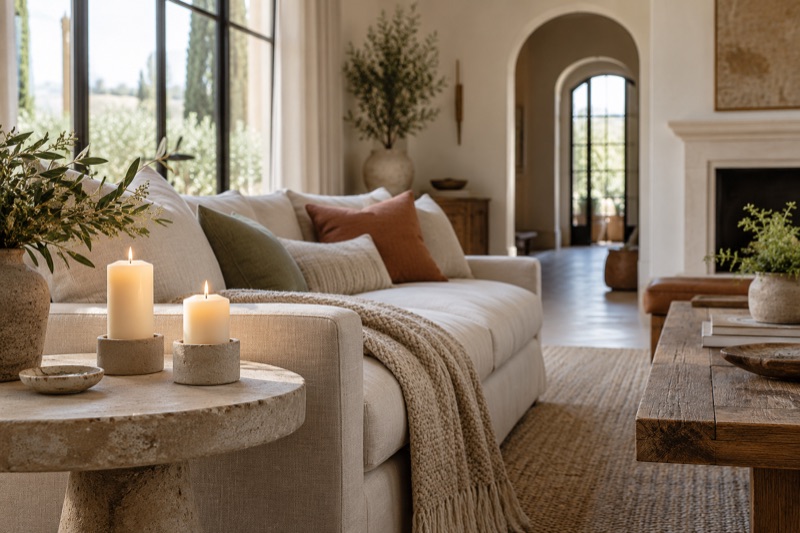
If a candle is part of your evening, enjoy it while you're up and in the room, keep it at least 1 foot from anything that can burn, and blow it out before you get into bed.
Do scented candles help you sleep?
The idea isn't supported by strong research, and the research that exists is on essential oils, not candles.
The question is usually framed as aromatherapy, which uses essential oils. The National Center for Complementary and Integrative Health (NCCIH), part of the National Institutes of Health, says aromatherapy is sometimes used for insomnia but that it's not known whether it helps, because little rigorous research has been done (NCCIH). On lavender specifically, NCCIH says it's unclear whether lavender aromatherapy has benefits for sleep quality or insomnia (NCCIH).
It's worth being clear about what that research doesn't show:
- It isn't about candles. NCCIH's summaries cover aromatherapy with essential oils, not scented candles.
- It doesn't settle the question. "Unclear" means the evidence is too thin or too mixed to say.
- It doesn't change the safety advice. Even if a scent did help, nothing in the research suggests burning a flame beside you all night.
So choose a bedroom scent because you like it, and don't expect it to do more than smell good.
Flameless ways to scent a bedroom
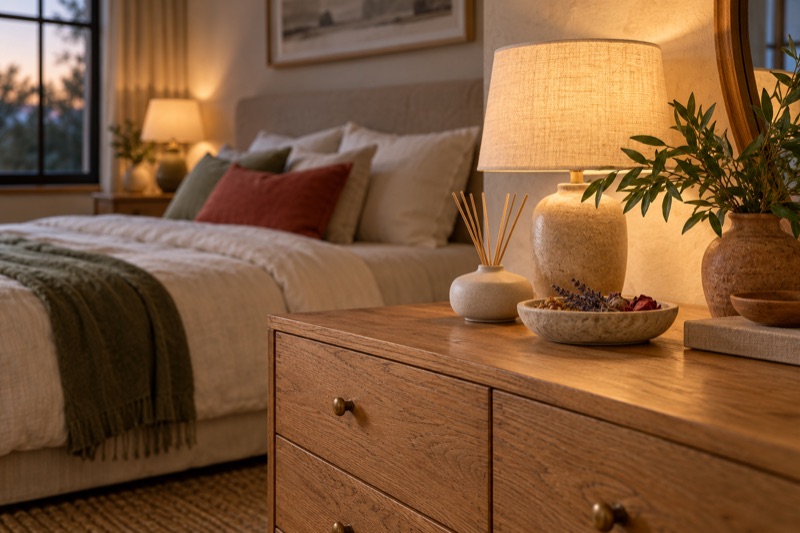
You don't need a flame for a bedroom to smell good at night. The options:
| Flame? | Notes | |
|---|---|---|
| Unlit scented object on a dresser | No | Scents the room as it sits; nothing to switch on or blow out |
| Reed diffuser | No | Steady background scent; keep it where it won't be knocked over |
| Scented sachet | No | Best in a drawer or wardrobe, so clothes and linen pick it up |
| Battery-operated flameless candle | No | The NFPA suggests these; they give candlelight, not necessarily scent |
| Electric diffuser | No, but it needs power | Follow the maker's instructions on overnight use |
The simplest is an object made to be smelled, not burned. Our own Le Bonne Pomme is an apple of hand-poured soy and beeswax, hand-painted one by one and presented under a handblown glass cloche. It isn't lit. Displayed under its cloche, it scents a room without being lit, and its fragrance lasts about 60 days, depending on room size. On a dresser, keep it out of direct sunlight and away from heat sources such as a radiator.
The rest is housekeeping. Freshly washed bedding and a room aired out during the day are the base layer of a good-smelling bedroom. How Often Should You Wash Towels and Sheets? covers the schedule.
For placement room by room, see Candles That Scent a Room Without Being Lit. For electric options and the confusion around the term, see What Is a Cold Diffuser? Two Very Different Things.
Scents people choose for bedrooms
Lavender is a familiar bedroom scent. Others reach for soft florals, woods, musk or the plain smell of clean linen. Fruit notes such as crisp apple, peach and red berries are a lighter alternative to heavier, sweeter scents.
A bedroom is usually smaller than a living room and often closed at night, so a little goes a long way. One source is plenty; How Many Candles Does It Take to Scent a Room? explains why one is the place to start. Expect to notice it less as the weeks go on, because your nose adjusts to a scent you live with.
For the rest of the house, How to Make Your House Smell Good: A Room-by-Room Guide takes each room in turn, and How to Make Your Bathroom Smell Good, Always covers the room next door.
FAQ
Can you sleep with a candle on?
No. The NFPA advises blowing out all candles before you go to bed and avoiding candles in bedrooms and anywhere people may fall asleep. That applies to jar candles and tealights as much as tapers.
Is it good to sleep with scented candles on?
No. A burning candle left overnight is a fire risk, and the claim that scent improves sleep isn't supported by strong research. If you want a bedroom to smell good at night, use something that doesn't need a flame.
Do scented candles help you sleep?
There's no good evidence that they do. NCCIH says it's unclear whether aromatherapy, including lavender, helps with sleep, and its summaries concern essential oils, not candles. Choose a scent you enjoy and blow the candle out before bed.
Can I leave a candle burning in another room while I sleep?
No. The NFPA says to blow out all candles when you leave the room or go to bed.
What's the best scented candle for a bedroom?
One you're happy to enjoy without a flame at night, or one you light earlier in the evening and blow out before bed. Le Bonne Pomme is made for the first: it can be lit, but isn't meant to be, because the painted finish will melt and the wax may drip, which is not a defect. If you ever light it, or any candle, the same rule applies: blow it out before bed.