To make your house smell good, clear what smells bad first, then add one fragrance you like to the rooms that matter. Fresh air, clean surfaces and dry towels come before any scent, and a single quiet source in each main room carries the rest. This guide takes the house in order: the air, the entry, the living room, the kitchen, the bathroom, the bedroom, the guest room, and the flameless options that work in all of them.
Here is the short version, before the detail:
| Room | Fix first | Then scent with |
|---|---|---|
| Entry | Shoes, damp coats, bags | One unlit piece on the console |
| Living room | Throws, cushion covers, open windows | One source where people sit |
| Kitchen | Hood on while you cook and for about 15 minutes after, a clean filter, the trash | A shelf away from the stove, or the next room |
| Bathroom | Fan or window when you shower, towels spread on a bar, rarely used drains | One quiet source, out of the shower's spray |
| Bedroom | Fresh bedding, air from an open window | Flameless: a sachet, an unlit piece, a linen spray |
| Guest room | Air it, fresh linens, run the drains | Flameless, set out the day before |
Start with clean air
The Environmental Protection Agency (EPA) names three basic ways to improve indoor air: source control, better ventilation and air cleaners. Source control, it says, is usually the most effective: deal with the thing causing the problem. For ventilation, it advises opening windows and doors when the weather allows, and running bathroom and kitchen fans that exhaust outdoors, especially while you cook (EPA).
Fraunhofer WKI, a German research institute that studies indoor air, puts the order of work in one line: "Cleaning and ventilation are better than using fragrance." Fragrance is for adding a scent you like, not for covering one you don't.
A smell that keeps coming back is information. Fraunhofer notes that water damage and mold can be first noticed as a smell, and the EPA says a building that smells moldy may have hidden mold even when you can't see where (EPA). An unusual smell you can't trace, such as something burning, deserves attention rather than fragrance: Fraunhofer lists an overheating electrical appliance among the problems that can first show up as an odor. A sewer smell from a rarely used sink or shower is often a dry trap, the curved pipe whose water normally blocks sewer gas. The South Davis Sewer District says to run water in all sinks, showers and floor drains at least once a month (South Davis Sewer District).
If you want the house to smell good fast, a ten-minute reset does most of it:
- Open windows on opposite sides of the house, weather permitting.
- Take out the trash and recycling.
- Run the bathroom and kitchen fans, if they vent outdoors.
- Gather what's damp or worn, such as towels, dish cloths and throws, and wash it.
Only then reach for scent.
Entry
The entry is where your house makes its first impression, and the place its residents are least equipped to judge. People get used to an odor quickly: a 2017 review in Physiology & Behavior describes habituation to odors as relatively fast (Pellegrino et al.), and Fraunhofer says we get used to most odors very quickly and stop noticing them. A visitor's nose hasn't made that adjustment, so the entry is worth checking after you've been out for a few hours.
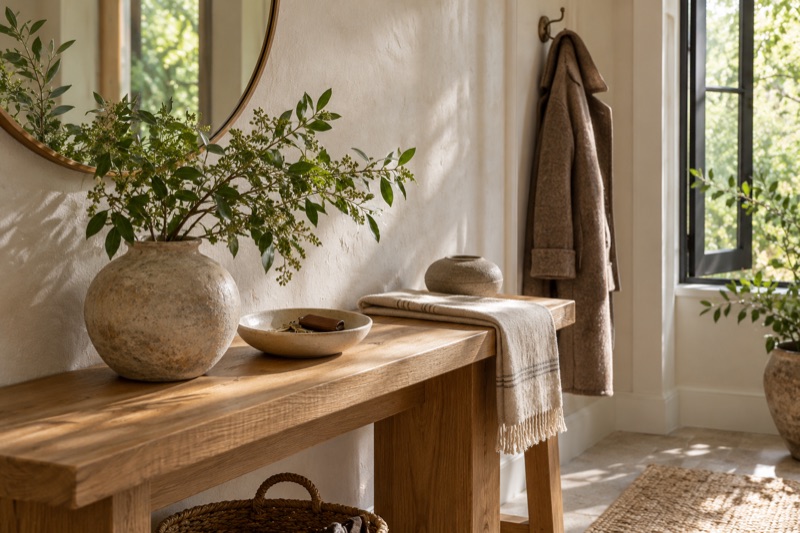
Clear the usual suspects first: shoes, damp coats and umbrellas, the bag you carried in. Then give the console one scent source. A hall table is a natural place for an unlit candle made for display, such as Le Bonne Pomme, set out of direct sunlight and away from a radiator. Candles That Scent a Room Without Being Lit explains how an unlit candle works and where to put one in each room.
Living room
The living room is often the largest room, with the most air moving through it, so scent thins out fastest here. Put one source where people sit or pass, such as a side table by the sofa or a low shelf, rather than in a corner. How Many Candles Does It Take to Scent a Room? explains why one is the place to start and why there's no reliable formula for more.
The rest is fabric and air. Wash throws and cushion covers, vacuum, and open the windows for a few minutes. A lit candle needs time to fill a room: CandleScience, a candle-making supplier, says a burning candle's scent is typically judged after at least two hours but no more than four (CandleScience). If you light candles in the evening, the National Fire Protection Association (NFPA) advises keeping them at least 1 foot (30 centimeters) from anything that can burn and blowing them out when you leave the room (NFPA).
Kitchen
Most of a house's strongest smells start in the kitchen, and the fix is moving air, not adding scent. The EPA advises using exhaust fans or open windows whenever you cook. Berkeley Lab's indoor air researchers say to turn the range hood on every time, at the highest speed you can tolerate, and to make sure it vents outdoors, because one that doesn't "will simply recirculate air in the kitchen." Cooking on the back burners could make a hood up to twice as effective (Berkeley Lab). NC State Extension suggests leaving the vent on for about 15 minutes after you finish (NC State Extension).
The type of hood matters. The Building America Solution Center, a Department of Energy-funded resource, says hoods ducted to the outdoors remove odors and moisture from cooking, while recirculating hoods only filter the air and return it to the kitchen (Building America). It also notes that a kitchen that always smells of cooking or grease may just need its hood filter cleaned or replaced (Building America).
After that, wipe the stovetop and counters, take the trash out the same night and wash the dish cloths. Whether a candle can do any of this is a common question, and the short answer is that it mostly masks; Do Candles Get Rid of Cooking Smells? has the detail.
For scent in the kitchen itself, keep wax and flame well away from the stove. The NFPA advises keeping anything that can catch fire away from the stovetop (NFPA), so an unlit piece on a shelf away from heat, or in the next room, is the better spot.
Bathroom
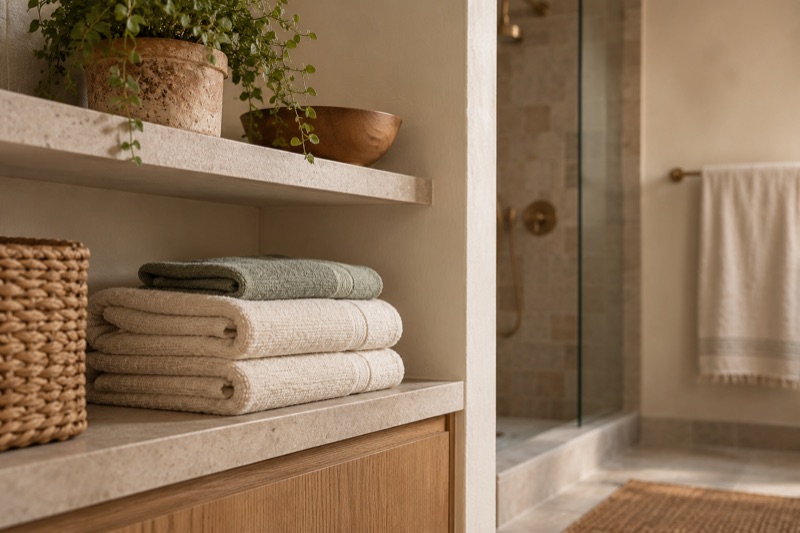
A bathroom combines moisture, damp towels and drains, and an exhaust fan does more about all three than fragrance can. The EPA advises running the bathroom fan or opening a window when you shower, and keeping indoor humidity below 60 percent, ideally between 30 and 50 (EPA). Cleveland Clinic suggests hanging a wet towel spread out on a bar rather than from a hook so it can dry between uses (Cleveland Clinic).
A small room with the door closed holds scent, so one quiet source is enough. How to Make Your Bathroom Smell Good, Always covers ventilation, towels, drains and where to put a scent in a small, steamy room.
Bedroom
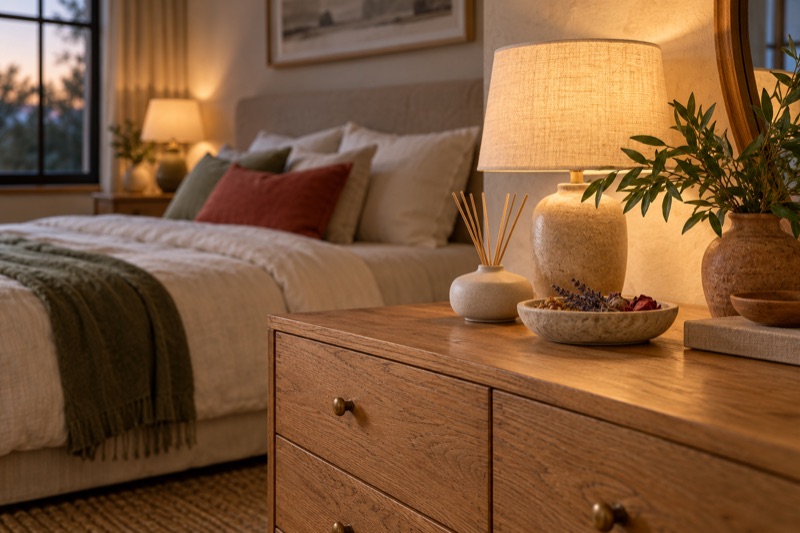
Start with what the room is made of: freshly washed bedding and air from an open window during the day. For scent, leave the flame out. The NFPA's tip sheet says to blow out all candles when you leave the room or go to bed, and to avoid candles in the bedroom and other areas where people may fall asleep. It adds that more than one-third of home candle fires started in the bedroom, and it suggests flameless candles instead.
A sachet in a drawer, a linen spray whose label allows it, or an unlit scented piece on the dresser all work without a flame. Can You Sleep With a Candle Burning? Safer Ways to Scent a Bedroom goes through the options and what the research does and doesn't say about scent.
Guest room
A guest room is often the room that has been shut the longest, and guests arrive with fresh noses. The day before, open the window for a while, make the bed with freshly washed linens and run water in the guest bathroom's sink and shower. The South Davis Sewer District lists guest bathrooms among the places dry traps are most often found.
Where guests sleep, the same NFPA advice applies as in your own bedroom, so use flameless scent. How to Make Your House Smell Good for Guests is a full checklist, from the day before to the end of the evening.
Flameless options
Every room above can be scented without a flame. The options differ in strength, upkeep and how they look on a shelf:
| Option | How it works | Best for |
|---|---|---|
| Unlit candle made for display | Fragrance leaves the wax at room temperature | Entry, living room, bedroom, bathroom |
| Reed diffuser | Oil climbs the reeds and evaporates | Steady background scent |
| Room or linen spray | A burst of fragrance, on demand | Quick refreshes before guests |
| Sachet or wax tablet | Close-range scent, no wick | Drawers, wardrobes, closets |
| Simmer pot | Water simmered with peel, herbs or whole spices | The kitchen, while you're home |
How to Scent a Room Without Lighting a Candle compares them in detail.
Our own Le Bonne Pomme is the first kind. It's an apple of hand-poured soy and beeswax, hand-painted one by one and presented under a handblown glass cloche. Displayed under its cloche, it scents a room without being lit, for about 60 days, depending on room size. Its fragrance, by Mane, the French fragrance house founded in 1871, opens on crisp apple skin, melon and peach, with rose and red berries at the heart and caramel, musk and wood at the base. It can be lit, but isn't meant to be: the painted finish will melt and the wax may drip, which is not a defect. Keep it out of direct sunlight and away from heat sources.
Whatever you choose, pick one fragrance family for the main rooms, so walking from room to room doesn't mean crossing between scents. How to Find Your Signature Home Scent shows how, and How to Make Your Room Smell Like a Hotel looks at how hotels keep theirs consistent.
FAQ
How do I make my house smell good without candles?
Air it out, clean what smells, then give each main room one steady flameless source: an unlit scented piece, a reed diffuser or a sachet. Keep a spray for moments when you want more. The flameless options above, and the full comparison, cover each one.
How do I make my house smell good naturally?
Start with ventilation and cleaning, which Fraunhofer ranks ahead of fragrance: open windows, run fans that exhaust outdoors, wash towels and linens, take out the trash. For a scent while you're home, a simmer pot works; the last answer below has its safety rule.
How do I make my house smell good with pets?
Start at the source: pet bedding, litter boxes, bowls and the spots your pet favors. Wash, empty and vacuum, and ventilate. Whether a particular fragrance product suits a home with animals is a question for your veterinarian. Home Fragrance and Pets: What to Know has more.
How do I make my house smell good after cooking?
Run the hood while you cook and for about 15 minutes after, open a window, wipe up and take out the trash. Scent comes last. Do Candles Get Rid of Cooking Smells? explains why.
Do cinnamon sticks make a house smell good?
Simmered in water on the stove, whole spices scent the kitchen and beyond, but only while the pot is on. Treat it as cooking: the NFPA advises checking simmering food regularly, staying in the kitchen and using a timer. Top up the water so the pot never boils dry.