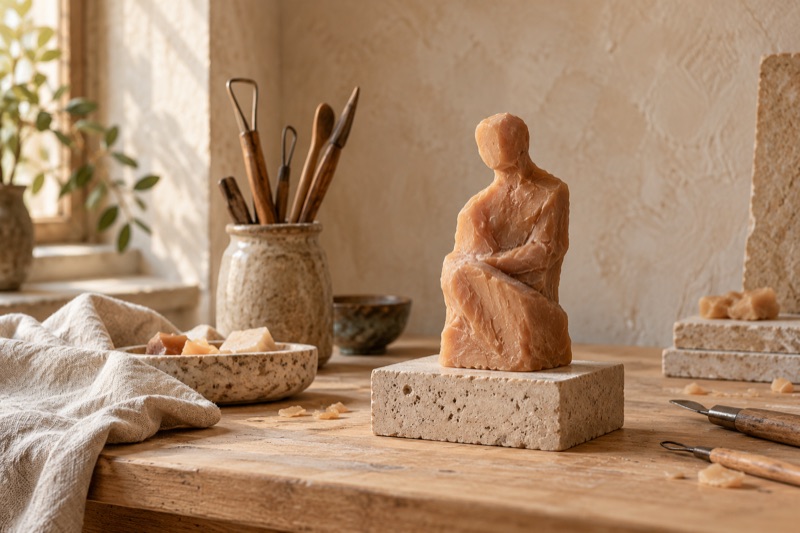
Wax sculpture is sculpture made in wax: models, figures and portraits, shaped by hand or cast in molds. Artists have used it as a sketchpad, churches as an offering, doctors as a teaching aid and showmen as a draw. Below: why wax works, how it served devotion, medicine and portraiture, and where it has gone since.
Why wax
The wax sculptors use is a prepared material. Larousse defines cire à modeler, modeling wax, as wax mixed with other substances, such as chalk or flour, tinted at will and used for modeling. The University of Florence's museum says the wax workers of its eighteenth-century workshop used beeswax together with other substances, including Chinese wax and turpentine, and added dyes, even gold powder, to reach the right shades.
Wax also let artists work out a figure before committing to stone. The V&A holds Michelangelo's model for a Prisoner, about 1519, made in red wax over an armature on a cork base for the tomb of Pope Julius II. According to Giorgio Vasari, Michelangelo would lower such a model into water and raise it a little at a time, to see how the figure should emerge from the marble.
The same softness is wax's weakness. The V&A removes its wax sculptures from display in the summer months because they risk melting. And wax can be lost on purpose: in lost-wax casting, a sculpture is made in wax, and the Getty explains that it is then melted away and replaced by molten metal. Larousse records the phrase moulage à cire perdue for the process.
Votive and devotional wax
An ex-voto, says Larousse, is a picture or symbolic object hung in a church after a vow or in thanks for a favor granted. In Italy, as the next source shows, many were made of wax.
The V&A's catalogue notes that life-size painted terracotta busts and other votive images, often made of wax, were popular in fifteenth- and sixteenth-century Italy. It names Orsino de' Benintendi as a wax sculptor who specialized in them, and says the workshop first run by Orsino, and later by his son Antonio, was the principal producer of effigies of the Medici family from the late 1400s.
Candles were a form of offering too. The Catholic Encyclopedia describes a medieval custom of "measuring to" a saint: offering a candle, or candles, equal in length to the height of the person for whom a favor was asked. It traces the custom to St. Radegund, who died in 587, and says it was especially common in England and northern France in the twelfth and thirteenth centuries. Our history of candles in France follows the church's wax from there.
Anatomical models
The most extraordinary use of wax is scientific. In Florence, according to the University of Florence, a ceroplastic workshop opened in 1771 under Felice Fontana and stayed active for almost a century. The grand duke Pietro Leopoldo founded the museum known as La Specola in 1775, and by then a considerable number of anatomical waxes had been made by the modeler Giuseppe Ferrini under Fontana's direction.
The museum says each wax is a faithful reproduction of a dissected cadaver, even showing anatomical anomalies and glands not yet known when they were made. In an age before digital reconstructions, it notes, they could stand in for cadavers as teaching tools. Its collection of human anatomy holds 513 urns, each a case of wood and glass, and 26 full figures, 18 of them life-size. La Venere comes apart in layers to reveal a small fetus, and Lo Spellato, a flayed figure, recalls the poses of Michelangelo. Clemente Susini and Egisto Tortori number among its best-known modelers.
The workshop's work traveled. The museum says it filled commissions for Cagliari, Bologna, Pisa, Pavia, Modena, Budapest, Leiden, Montpellier and Vienna. The Josephinum in Vienna says that Joseph II, enthused by the Florentine models, ordered 1,192 for his newly founded academy. They were meant for trainee military physicians and surgeons, and also for the public, and they still stand in seven rooms in their original rosewood and Venetian glass cases.
A French connection: Napoleon visited La Specola and ordered 40 crates of waxes, but the museum says they never reached Paris and are in Montpellier today, for reasons unknown.
Florence also keeps five seventeenth-century waxes by the Sicilian abbot Gaetano Giulio Zumbo, which the museum calls a starting point for the use of wax in anatomical representation. Their titles include La pestilenza and Morbo Gallico, and the museum says they recall the recurring waves of plague and syphilis of the 1600s. The museum notes another Zumbo anatomical head at the Muséum national d'Histoire naturelle in Paris.
Portraits and busts
Wax portraits are older still. Pliny the Elder, in his Natural History, says that in earlier Roman households portraits modeled in wax stood in separate niches, ready to join the family's funeral processions, with the pedigree traced in lines on each.
In the Renaissance, wax and terracotta carried likenesses taken from the living face. The V&A's account of a Medici bust notes that life casting, taking a plaster mold of the sitter's face, was popular throughout the Renaissance, and that the Tuscan painter Cennino Cennini wrote detailed instructions for it in the 1390s.
Wax museums
The wax museum grew from that tradition. Larousse defines a cabinet de cire or musée de cire as a collection of colored wax figures of famous people and scenes.
Madame Tussauds' own history begins in France. By its account, Madame Tussaud was born Marie Grosholtz in Strasbourg in 1761, modeled Voltaire in 1777 and in 1780 became art tutor to the sister of Louis XVI at Versailles. After her release from prison in 1793, it says, she made death masks of executed nobles and of her former employers, the King and the Queen. In 1794 she inherited Dr. Philippe Curtius's wax exhibition. She took it to the British Isles in 1802 and set up a London base on Baker Street in 1835, and her grandsons moved it to Marylebone Road in 1884.
In Paris, the Musée Grévin says it opened on June 5, 1882. Its founder, the journalist Arthur Meyer of Le Gaulois, wanted the public to see in three dimensions the celebrities who made his front page, and the caricaturist and sculptor Alfred Grévin became its artistic director. Grévin says its workshops have held the state Entreprise du Patrimoine Vivant label since 2017.
How are figures made today? Madame Tussauds says each is created with its subject, using hundreds of photographs and measurements and 3D scans, and that every hair is inserted by hand, which can take up to six weeks a figure. It adds that the techniques are the ones Marie Tussaud mastered over two hundred years ago.
Sculptural candles today
Wax didn't leave sculpture; it changed form. One living form is the sculptural candle: a bust, a fruit or an architectural coil made to be looked at. Our guide to sculptural candles covers the category, from wax busts to Urs Fischer's melting sculptures.
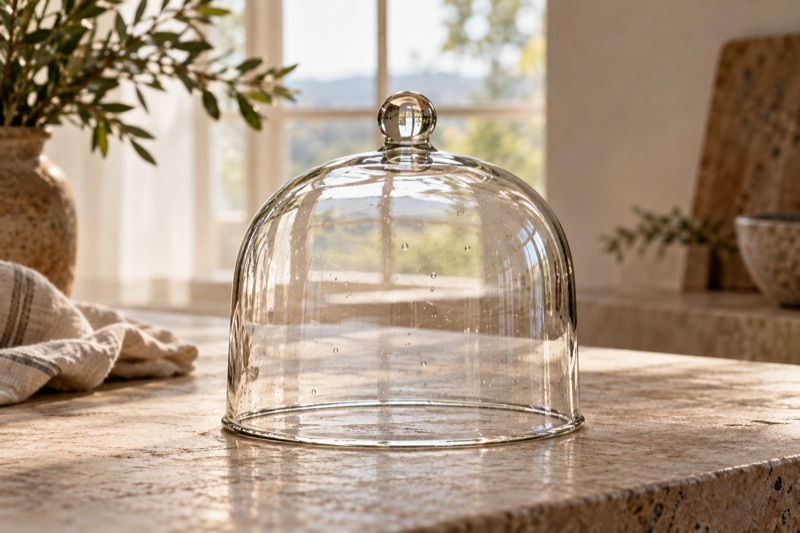
Le Bonne Pomme belongs to that line. It is a hand-poured apple of soy and beeswax, hand-painted one by one and presented under a handblown glass cloche. Beeswax is the material of the Florentine workshop. Displayed under its cloche, the apple is designed to scent a room without being lit, with a fragrance by Mane, the French fragrance house founded in 1871. It can be lit, but isn't meant to be: the painted finish will melt and the wax may drip, which is not a defect. As with any wax object, keep it out of direct sunlight and away from heat sources.
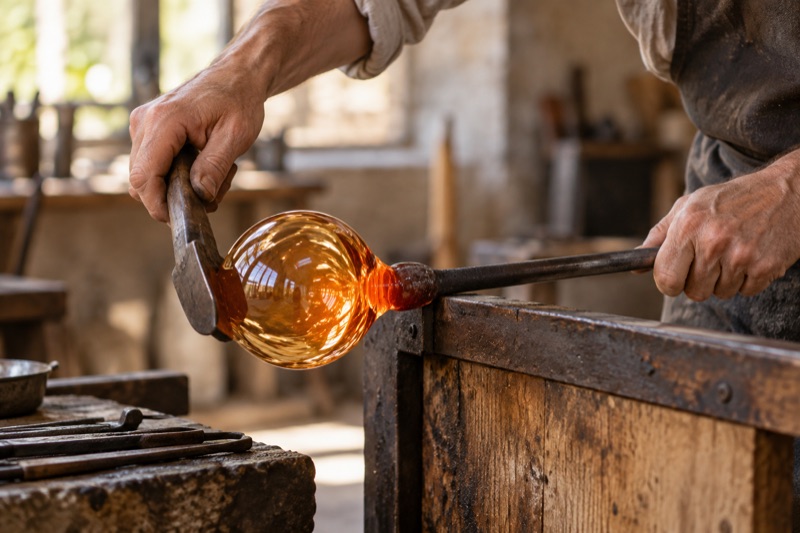
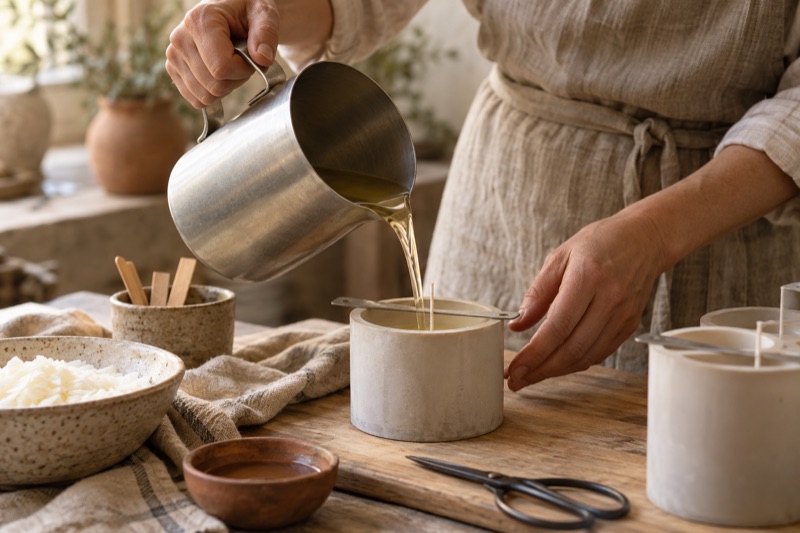
For the crafts behind a hand-finished object, see our guide to French savoir-faire, what labels such as hand-poured mean, and how hand-blown glass is made.
FAQ
What is wax sculpture? Sculpture in wax, modeled by hand or cast in a mold. It includes sketches and models, votive offerings, anatomical figures, portrait busts and the figures of wax museums.
How are wax figures made? Madame Tussauds says its figures begin with hundreds of photographs and measurements and 3D scans, and that every hair is inserted by hand. The Florentine anatomical waxes, by the University of Florence's account, started from a plaster cast and used beeswax worked with other substances, with colors added.
How do you make a wax sculpture? Sculptors have modeled wax by hand, often over an armature as Michelangelo did for his Prisoner, or cast it in a mold. Wax is soft and melts easily, so it is usually protected from heat.
What is the lost-wax method? A way of casting metal. The sculpture is made in wax and encased in clay, the wax is melted out and molten metal fills the space. The Getty's explainer shows the steps.
Where can you see wax sculpture? Among the places named above: La Specola in Florence, the Josephinum in Vienna, Madame Tussauds in London and the Musée Grévin in Paris. The V&A's Michelangelo wax is kept off view in the summer months.