You mostly don't clean a decorative candle you keep unlit. You keep dust off it. Put it out of the sun and away from heat, cover it with a cloche or lid, and when dust does settle, lift it off with a soft, dry brush. Skip sprays, wipes and solvents.
This guide covers where to display a painted wax object, how light and heat affect it, dusting, cleaning the glass, storing it and the white film that natural wax can develop. Le Bonne Pomme's own care note is short: keep it out of direct sunlight and away from heat sources. The rest here is general practice for wax objects, not Pommette instructions.
Where to display it
Choose a spot that's cool, dry and out of direct sun, on a stable surface away from the edge. The National Candle Association (NCA), the US candle trade group, says to store candles in a cool, dark and dry place, and the same logic holds for display.
Keep it away from anything that gives off heat: radiators, stovetops, fireplaces and sunny windowsills. Steadiness matters as much as the number. The Deutsches Hygiene-Museum Dresden's conservation recommendations for wax moulages, the lifelike wax models in medical collections, call for as steady a climate as possible, at 18 to 22 °C (about 64 to 72°F). That's ordinary living-room temperature. It's a benchmark, not a target for your shelf.
Light and heat
Light. The NCA says candles may fade if left in bright light for a long time, and advises avoiding direct sunlight and harsh indoor lighting such as a spotlight. On a painted piece, the color is the point.
Heat. Wax softens as it warms. One supplier says a common container soy wax melts at 113°F and can be "a little too soft for the summer heat." The Food and Agriculture Organization (FAO) of the United Nations says beeswax stays highly plastic at about 32°C (90°F). Paint sits on the surface, so wax that softens can take its finish with it. If the spot is warm to the touch, or catches afternoon sun, move the piece.
The cloche and the sun. A garden cloche is made to trap the sun's heat. Larousse defines it as a glass shelter that concentrates the sun's heat on plants, and the RHS says glass holds heat better overnight than plastic does. A glass dome in direct sun is a poor place for wax. What Is a Glass Cloche? has the history.
Le Bonne Pomme can be lit, but isn't meant to be: the painted finish will melt and the wax may drip, which is not a defect. That's the same softening you're guarding against, at a higher temperature. Can You Burn a Painted Candle? explains how a flame treats a painted surface.
Dusting the finish
Dust is the main threat to a wax object, according to conservation research. A 2018 study in the International Journal of Conservation Science calls the build-up of dirt on wax sculptures a major cause of deterioration, and notes that because wax is thermoplastic and electrostatic, some deposited dirt becomes encapsulated in the outer layer. In practice, that means two things: dust early, and keep a cover on.
How to dust.
- Use a clean, dry, soft-haired brush. The researchers in that study removed loose dust with a soft-haired brush before testing the surface.
- Make light strokes, starting at the top and working down, and don't press.
- Support the piece by its base while you brush, so you aren't pressing on the paint.
The NCA's tip for dust on ordinary candles is a piece of nylon or a soft cloth, dry or slightly damp. For a painted piece, the brush is the cautious choice, and we'd keep it dry.
What to skip. Sprays, wipes, glass cleaner, alcohol, soap and solvents don't belong near a painted wax surface. The same study notes that organic solvents have been observed to soften wax paste, and its researchers tested each liquid they tried by analyzing the surface under magnification and chemically. A hair dryer is out too: heat moves the paint.
Handling. Museums limit it. The Dresden recommendations say to avoid unnecessary touching, never pass wax objects around, and set them down only on stable, padded surfaces. At home, that means handling the piece by its base with clean, dry hands, and putting it back rather than leaving it on a counter.
Cleaning the cloche
The glass is the easy part, and it needs no product. Lift it straight up with both hands and set it down away from the object, on a folded cloth.
- Dust and fingerprints. Wipe the glass, inside and out, with a dry, soft, lint-free cloth.
- Smudges that remain. Dampen the cloth with room-temperature or lukewarm water, wring it out, wipe, and then dry the glass right away. Keep water off the wax.
- No cleaners. Skip glass sprays, vinegar, alcohol and soap.
- No sudden temperature changes. The Corning Museum of Glass explains that glass doesn't break from heat or cold alone: it is extreme temperature changes that cause glass to break. So no hot water on cold glass, and no setting the glass on a warm surface.
Make sure the glass is completely dry before it goes back over the piece. How to Use a Candle Cloche has more on lifting and placing one.
Storing it
If you put the piece away between seasons, use the same conditions as for display. The NCA says to store candles in a cool, dark, dry place with the lid on to keep dust and debris off, and a cloche does a lid's job for a piece like this.
The Dresden recommendations add three points for wax: avoid attics and exterior walls as storage places, don't stack objects, and avoid knocks and unnecessary movement. Pack the cloche separately, so glass never rests against wax.
Storing doesn't stop fragrance from fading slowly. How Long Do Unlit Candles Last? covers what to expect, and How to Read Fragrance Notes explains how a scent is built.
Bloom on natural wax
Natural waxes can develop a whitish film, and it isn't dirt. The FAO says the white bloom on beeswax consists of small wax crystals, and that the slow crystallization it describes is reversible without damage. CandleScience says the same kind of crystal growth on soy wax, which it calls frosting, is "solely an aesthetic issue" that doesn't change how a candle burns or smells.
The FAO adds that melted bloom reverts to normal wax. Melting isn't a home fix on a painted piece, though, because heat moves the paint along with the wax. Leave the film alone, and if it bothers you, ask the maker. Soy vs Beeswax Candles, and the Case for Blending compares the two waxes, including frosting and bloom.
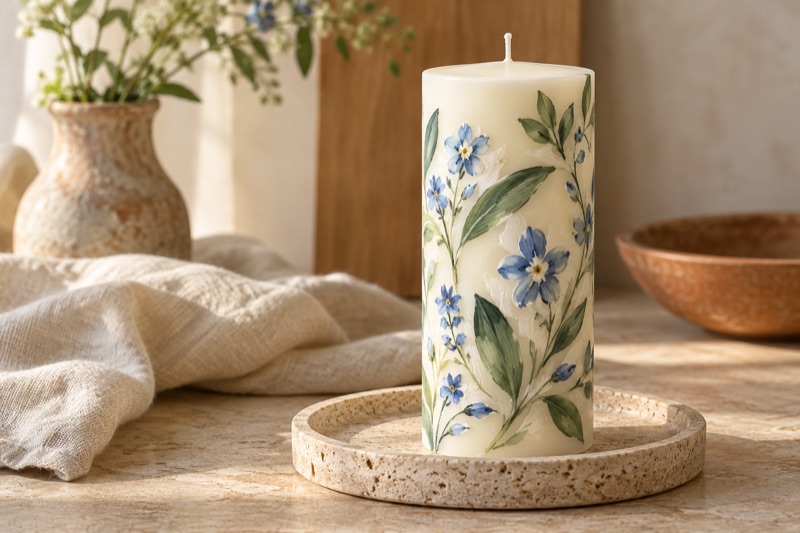
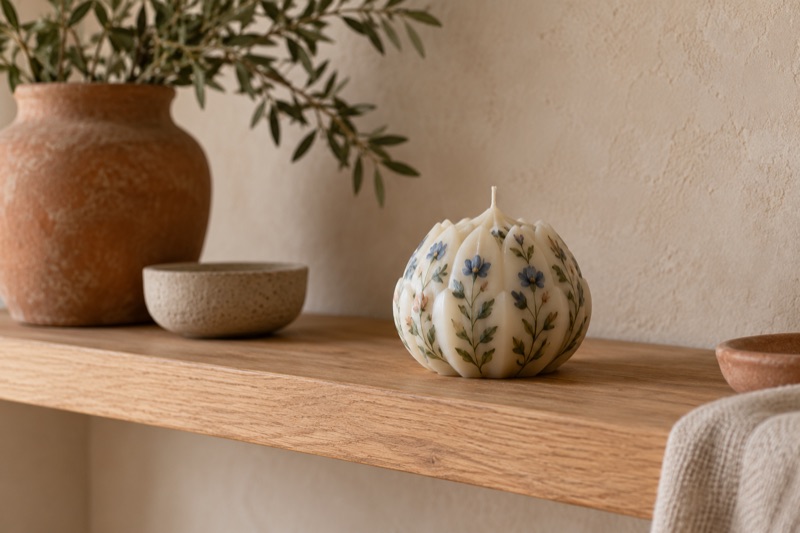
Le Bonne Pomme is a sculptural apple of hand-poured soy and beeswax, hand-painted one by one and presented under a handblown glass cloche. Displayed under its cloche, it scents a room without being lit. With the care above, there isn't much more to do.
FAQ
How do you clean decorative candles? Mostly, you don't clean them, you keep dust off. Use a soft, dry brush with light strokes, and keep the piece covered, out of direct sunlight and away from heat. Avoid sprays, wipes and solvents.
Can you use a damp cloth on a painted candle? For ordinary candles the NCA allows a soft cloth slightly dampened with water. For a painted piece, we'd stay dry. A soft brush removes dust without the risk, and we found no guidance on water and painted wax.
What is the white film on my candle? Most likely bloom (on beeswax) or frosting (on soy wax), both small wax crystals. It's cosmetic. Don't warm a painted piece to remove it.
Where should I display a decorative candle? Somewhere cool and dry, out of direct sunlight, away from radiators, stoves and fireplaces, and covered if you can.
How do I clean the glass cloche? Lift it off, wipe it with a dry lint-free cloth, and for smudges use a cloth barely damp with lukewarm water, then dry it at once. Avoid cleaners and sudden temperature changes.