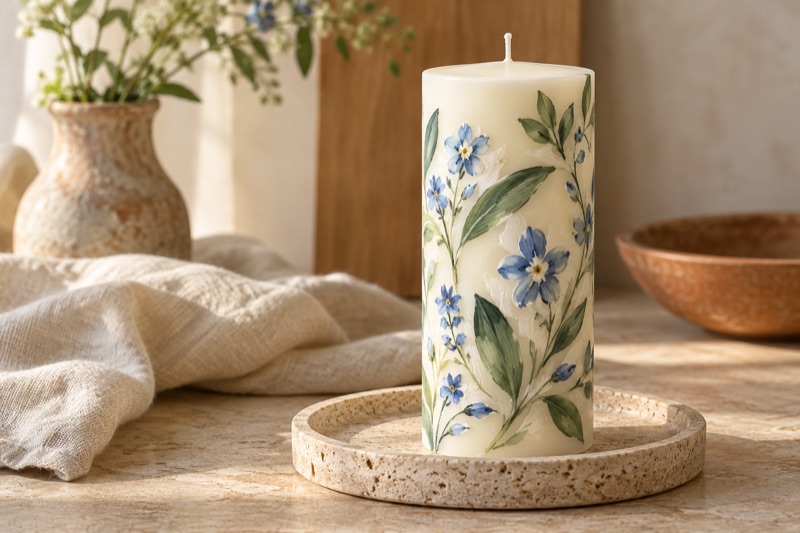

The core candle rules are short. Burn a new candle long enough for the wax to melt edge to edge, about an hour per inch of diameter. Trim the wick to ¼ inch before every burn. Burn no more than four hours at a time. Keep the candle 12 inches from anything that can burn, never leave it unattended, and put it out with a snuffer. A candle you keep unlit has fewer rules: store it cool, dark and dry, keep it covered, and follow the maker on whether it's meant to be lit.
These rules come from two sources: the National Candle Association (NCA), the US candle industry's trade group, and the National Fire Protection Association (NFPA), the fire-safety organization. Below is each rule, why it exists and what changes for candles that never meet a flame.
Before the first burn
Read the label. The NCA says every candle should carry a cautionary label with three rules: Burn Within Sight, Keep Away from Combustibles and Keep Away from Children. It adds that a missing label may mean the candle doesn't meet safety standards.
Pick the spot. Set the candle on a stable, heat-resistant surface, in a sturdy holder, away from anything flammable. The NCA says to avoid drafts: not beside open windows, fans or air vents. NFPA's tip sheet asks for a sturdy, uncluttered surface.
Make the first burn a long one. The NCA's rule is that a candle should burn one hour for every inch of its diameter, so a 2-inch candle burns for 2 hours. The point is to melt the wax across the whole top. If the first burn stops short, the NCA says, a "memory ring" forms, and the candle "will continue to tunnel for the life of the candle." A wide candle can run past the four-hour limit below, so follow the maker's instructions. Candle Tunneling: What It Means and How to Fix It covers the problem and its fixes.
The wax matters too. It decides how quickly a pool forms: CandleScience lists the melt point of a common container soy at 113°F and of white beeswax at 144°F. Soy vs Beeswax Candles, and the Case for Blending compares them.
Trimming the wick
Trim the wick to ¼ inch before each use. The NCA says doing so prevents high flames and soot. NFPA's educational messages add that long or crooked wicks cause uneven burning, dripping or flaring. Trim with the candle unlit and cold, and keep the wax pool clear of trimmings and matches.
You don't need a special tool. NFPA names a wick trimmer, a nail clipper or scissors. A wick trimmer is a small scissor-like tool with a long handle, so it reaches a wick at the bottom of a deep jar more easily than scissors do. Whether it's worth owning depends on your candles: for shallow ones, scissors do the same job.
- Let the candle cool completely, with the wax set.
- Cut the wick so about ¼ inch remains.
- Tip out or lift out the trimmings so none fall in the wax.
How long to burn
- No more than four hours at a time, and let the candle cool for at least two hours before relighting, according to the NCA and NFPA. Maximum burn times vary, so follow the maker's instructions.
- Avoid very short burns. If you light a candle only briefly, the NCA warns, the wax can't melt completely.
- Stop at ½ inch. The NCA says to stop burning a container candle when ½ inch of wax remains (2 inches for other candles), and NFPA says to put it out at ½ inch. Put it out sooner if the flame gets close to the holder.
Safety
These rules apply every time a candle is lit.
- Never leave a burning candle unattended. Both the NCA and NFPA say so. NFPA's analysis of 2014 to 2018 home fires found that in 16 percent of candle fires, the candle was unattended or abandoned.
- Put candles out before you leave the room or go to bed. NFPA's tip sheet also says to avoid candles in bedrooms and other places where people may fall asleep. Can You Sleep With a Candle Burning? has the reasoning.
- Keep 12 inches clear. NFPA's tip sheet says 1 foot (30 centimeters) from anything that can burn, and the NCA says 12 inches from curtains, bedding and books. The same NFPA analysis found that three in five candle fires started when something that could burn was too close.
- Use sturdy holders, and keep burning candles at least 3 inches apart so they don't melt each other.
- Don't move a candle while the wax is liquid.
- Keep hair and loose clothing away from the flame. Keep candles out of reach of children and pets, and never leave a child alone in a room with a burning candle.
- Never use a candle where medical oxygen is in use.
- Consider flameless candles. NFPA calls them a safer option.
Putting it out
Use a snuffer, a small metal cup on a long handle that smothers the flame. NFPA's educational messages call it the safest way to put out a candle without splattering hot wax, and the NCA lists it first, with gently blowing the flame out as the alternative. Never use water, which can splatter hot wax and, as NFPA notes, may break a glass container.
Check that the wick has stopped glowing before you leave the room, and don't touch or move the candle until the wax has completely cooled. And never put a cloche or lid over a flame: How to Use a Candle Cloche explains why.
Rules for candles you keep unlit
Many candles are bought to be looked at, or to scent a room without a flame. For these the rules shrink to a few.
- Know what it's for. A candle with burn instructions was made to be lit. One sold for display, especially if it's sculpted or painted, may not be. See Should Decorative Candles Be Lit? and Can You Burn a Painted Candle?.
- Store it cool, dark and dry, with the lid on. The NCA says the lid keeps dust and debris off the wax. A candle with no lid can sit under a cloche instead. The NCA adds that tapers should be stored flat so they don't warp.
- Keep it out of bright light. The NCA says candles may fade in bright light for long periods, so avoid direct sun and harsh spotlights.
- Keep it away from heat. Wax softens as it warms. One supplier says a common soy container wax can be "a little too soft for the summer heat."
- Don't save it forever. The NCA says highly fragrant candles last about 6 to 12 months, and it advises using and replacing them regularly. Fragrance evaporates from the solid wax too, so an unlit candle fades slowly. How to Read Fragrance Notes explains how a scent is built, and How Long Do Unlit Candles Last covers what to expect.
Le Bonne Pomme follows the unlit rules by design. It is a sculptural apple of hand-poured soy and beeswax, hand-painted one by one and presented under a handblown glass cloche. Displayed under its cloche, it scents a room without being lit. Its care note is the same as rule four: keep it out of direct sunlight and away from heat sources. It can be lit, but isn't meant to be: the painted finish will melt and the wax may drip, which is not a defect. If you ever light any candle you keep for display, the burning rules above apply.
FAQ
How do you use a candle wick trimmer? Let the candle cool, then hold the trimmer's blades around the wick and cut so about ¼ inch remains. Remove the trimmings from the wax before you light it.
What is a candle wick trimmer? A small scissor-like tool with a long handle, made for cutting a wick to length. It's one of three tools NFPA lists for the job, along with a nail clipper and scissors.
Is a candle wick trimmer worth it? Neither the NCA nor NFPA requires one. It's most useful for deep jars, where a long handle helps. The rule that matters is the trim itself, ¼ inch before every burn.
How do you trim a candle wick without a trimmer? With nail clippers or scissors, as NFPA's educational messages say. Cut with the candle cold and unlit, and clear the trimmings from the wax.
How long should a candle burn the first time? About one hour per inch of the candle's diameter, so the wax melts to the edge, within the four-hour maximum and the maker's instructions.
Do the rules change for a candle that isn't lit? Yes. There's no flame to manage, so the rules are about storage: cool, dark, dry and covered, away from heat and sun, and used within the NCA's 6 to 12 months for fragrant candles.