A perfumer is a person who composes fragrances: someone who has learned thousands of raw materials by smell and blends them, to a client's brief, into a formula. The trade calls fully qualified perfumers "noses." The International Fragrance Association (IFRA) says fewer than a thousand work worldwide, each after seven to ten years of training.
The same craft produces fine fragrance, laundry products, shampoo and the scent of a candle. Below: what a perfumer does, how perfumers train, the instrument on their desk, how a brief becomes a formula, and how candle fragrance differs from skin fragrance.
What a perfumer does
France's national careers service, Onisep, describes the job as blending natural essences and synthetic materials into top, heart and base notes, guided by the perfumer's inspiration and the client's wishes. Perfumers work in cosmetics and in the chemical industry, which includes detergents. Most are employed by companies that produce raw materials and fragrance concentrates for manufacturers, and Onisep says very few work in a house devoted to a single brand.
That is why the scent in a candle usually comes from a fragrance house rather than the brand on the label. Our guide to fragrance houses explains the arrangement.
A perfumer rarely works alone. Onisep lists an evaluator, who guides the perfumer toward the client's request and judges the formula, a regulatory specialist who checks the product against current rules, and application-lab engineers who put the concentrate into its final form, whether an alcohol solution, a shampoo or a cream.
What is a perfumer called?
In French, parfumeur or créateur parfumeur, and in the trade, nez, the nose. The CIDJ, a French information service for young people, lists "créateur de parfum, compositeur ou nez" as names for the same job. Larousse defines parfumeur more broadly, as someone who creates, makes or sells perfumes.
How perfumers train
Memory comes first. Onisep says a perfumer must recognize and name some 1,500 to 3,000 raw materials, and that training begins with smelling them every day. IFRA puts the full apprenticeship at seven to ten years.
There is no single route. Onisep gives three years of university study as the minimum and points to degrees in chemistry, cosmetology and formulation. Programs are few because jobs are few. Two kinds of institution do the teaching.
Schools. ISIPCA in Versailles says it was founded more than fifty years ago by the perfumer Jean-Jacques Guerlain. Its Scent Design & Creation program, run with the fragrance company IFF, lasts three years, is taught in English and ends with a four-month internship at an IFF creative center. The school prefers science degrees but doesn't require professional experience in perfumery.
House schools. Fragrance houses also train their own perfumers. Givaudan marked the 75th anniversary of its Perfumery School in 2021, saying it was founded by Jean Carles, whom it credits with designing the first olfactory training method.
In a May 2026 interview with the perfume magazine Bynez, published in partnership with the company, dsm-firmenich described its school. It dates to 1977, runs on a mentorship model for three to four years depending on the track, takes two to four new candidates a year and starts with a smell test. In the second year, the dean said, trainees learn to create fragrances for shampoos, body lotions, shower gels and candles.
Onisep describes the ladder that follows: assistant perfumer, then junior, then confirmed perfumer, with some moving on to evaluation.
The perfumer's organ
A perfumer composes at an organ. The term describes the bottles of raw materials arranged around a perfumer's desk. Onisep pictures a perfumer facing an orgue à parfums with hundreds of vials. The Encyclopedia of Smell History and Heritage describes the organ as the semicircle of ingredients on the desk that many perfumers use as an aid to composition. You can see a pyramid-shaped one in the Fragonard Perfume Museum in Paris.
The name borrows from music, and the comparison is old. In The Art of Perfumery, first published in 1855, the perfumer Septimus Piesse wrote that scents, like sounds, seem to form octaves, with some odors that coincide "like the keys of an instrument." IFRA still uses the image, saying perfumers compose much as a musician composes a score: bright top notes, structured middle notes and long-lasting base notes. Our guide to reading fragrance notes takes the pyramid apart.
From brief to formula
A project begins with a brief. According to Onisep, the perfumer studies the brand's olfactory world and where the product sits in the market, then turns the idea into a scent and a chemical formula.
The formula comes from trials. Onisep says a perfumer runs dozens of tests with exact dosages and often needs several hundred before the product is right. It gives rough timelines: a week for a shampoo, two to three months for an eau de toilette.
Evaluation runs alongside. IFRA says labs now use gas chromatography, trend data and even artificial-intelligence tools, but the perfumer's own nose still judges every finished formula. Onisep adds that a perfumer's freedom is never total, since strict regulations apply, and IFRA says the formula is screened against the IFRA Standards as a final step. Once the brief is approved, IFRA says, automated blending systems reproduce the formula with part-per-million precision.
Fragrance for candles vs skin
The craft is the same, but the product changes what the perfumer has to solve. IFRA says brand owners and fragrance houses work to match a scent's performance to its function, from laundry to fine fragrance to home care. The IFRA Standards also set maximum concentrations by product type, so the same material is allowed in different amounts in different products.
Candles bring their own conditions. The National Candle Association says candle makers work closely with fragrance companies, and that a burning candle releases scent as fragrance evaporates from the hot wax pool and from the solid candle itself. It adds that a well-made candle uses only fragrance materials approved for candle use, chosen from more than 2,000 aroma chemicals and essential oils. A fragrance for skin never has to be blended into wax.
An unlit candle has no heat to help release its scent. Our explainer on cold throw and hot throw covers what that means for a fragrance.
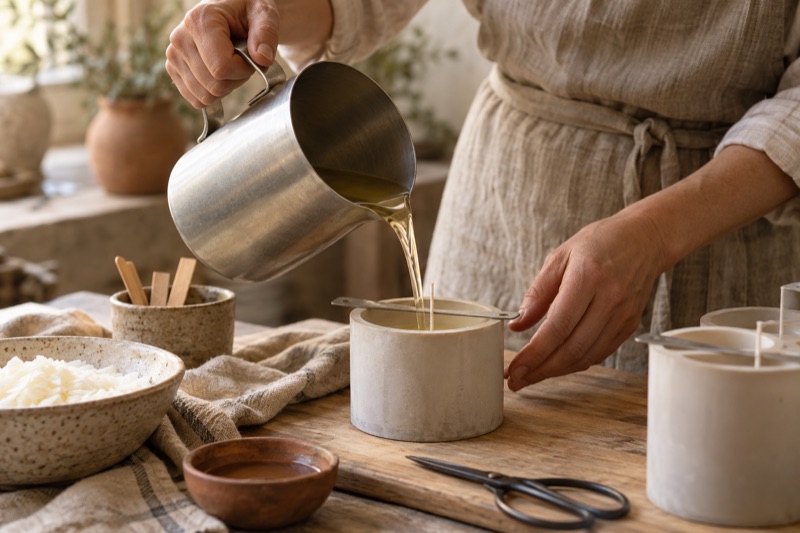
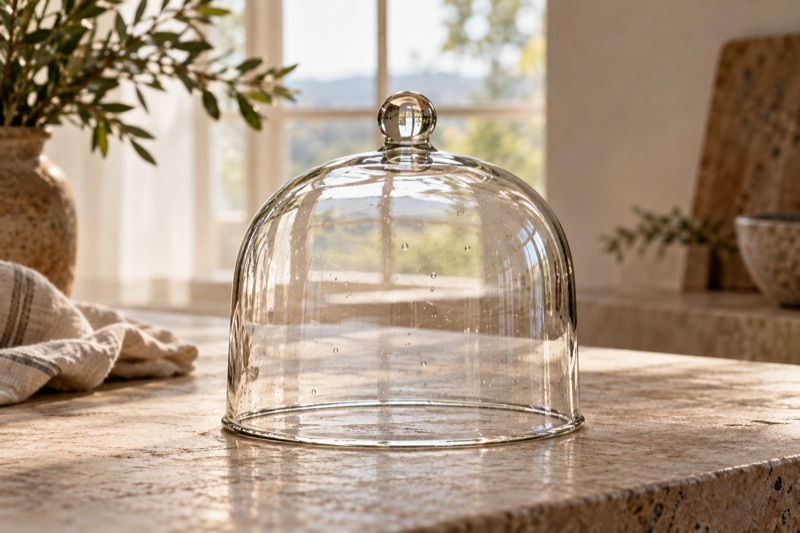
Le Bonne Pomme is an example of the unlit case. It is a hand-poured soy and beeswax apple, hand-painted one by one and presented under a handblown glass cloche. Its fragrance is by Mane, the French fragrance house founded in 1871, written as crisp apple skin, melon and peach at the top, rose and red berries at the heart, and caramel, musk and wood at the base. It is designed for cold diffusion: displayed under its cloche, it scents a room without being lit. It can be lit, but isn't meant to be: the painted finish will melt and the wax may drip, which is not a defect.
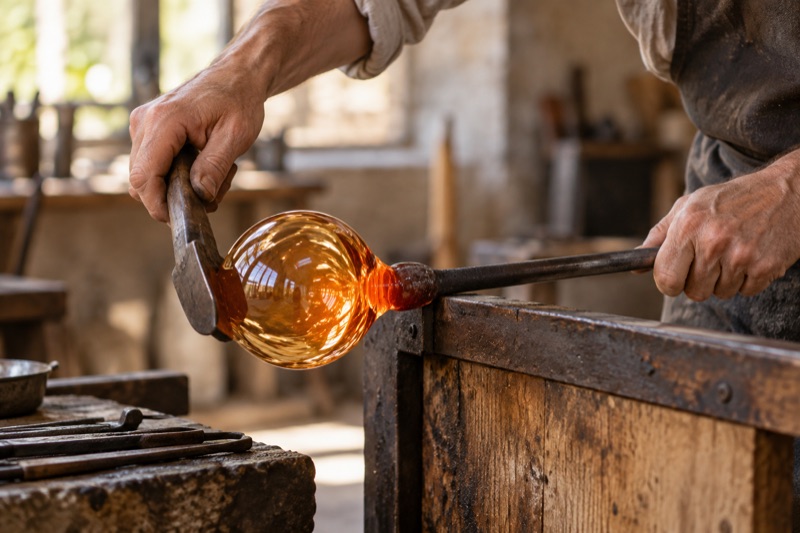
For the other crafts that go into a scented object, see our guide to French savoir-faire, what labels such as hand-poured mean, and how hand-blown glass is made. The raw materials themselves are the subject of how perfume is made.
FAQ
What is a perfumer called? A nose, in the trade. In French, parfumeur, créateur parfumeur or nez.
How long does it take to become a perfumer? IFRA says seven to ten years of training. Programs vary: ISIPCA's Scent Design & Creation takes three years, and the dsm-firmenich school described above runs three to four years, on top of earlier study.
How much does a perfumer make? We couldn't find a reliable figure. Onisep says only that a beginner's pay varies with the workplace and the type of company.
Do perfumers create candle scents? Yes. The National Candle Association says candle makers work with fragrance companies, and dsm-firmenich says its trainees learn candle fragrance.
Is a perfumer the same as a nose? Yes. IFRA, Onisep and the CIDJ all treat "nose" as another name for a fully qualified perfumer.