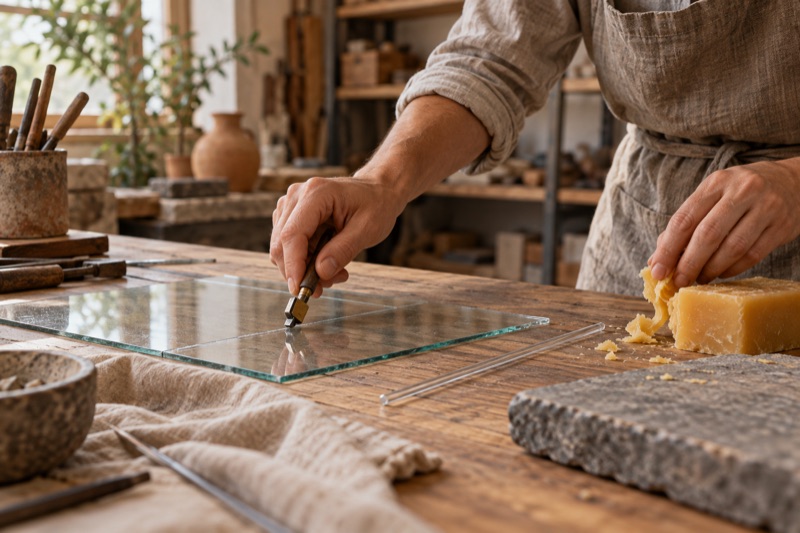
An Entreprise du Patrimoine Vivant (EPV), or Living Heritage Company, is a French state label for companies with rare or exceptional know-how. Created in 2005, it goes to companies, not to people or products, lasts five years and is held today by about 1,300 firms, from candle makers and glassworks to a historic perfume house.
Below: what the label recognizes, who awards it, what it can and can't tell a buyer, and examples from the official list.
What the EPV label is
The Direction générale des Entreprises, the state's business directorate, describes it as a label that distinguishes French craft and industrial companies with rare, exceptional know-how. The SME law of August 2, 2005 created it.
"Heritage" here is economic, not only historical. The state lists three groups of criteria, and a company can meet them in combination:
- Specific economic heritage: rare equipment, tools, machines, models or technical documentation, industrial property rights, or an active approach to creation and innovation.
- Rare know-how: skills based on traditional or high-technical methods that few companies hold, including in-house training that passes them on.
- Location, reputation or social responsibility: production in a historic area or at the same site for more than fifty years, or in buildings of historic value; a notable name; or a responsible approach, such as promoting trades to young people.
About 1,300 companies hold the label, the state says, and nearly 4,000 have held it since 2005. Together the holders account for about 59,000 jobs.
Who awards it and how
Since 2020, the prefect of the region where a company has its head office grants or renews the label. It is awarded for five years and can be renewed. The first awarding commission met in July 2006, and the rules of award come from a decree of May 23, 2006.
To apply, a company files online through the state's Démarches Simplifiées platform. A fee covers the file: €975 for turnover up to €500,000 and €1,950 from €501,000. Referents at each regional Chambre de métiers et de l'artisanat help applicants prepare. The state names the firm SGS as the label's manager.
The state's pages describe how to apply rather than how the file is reviewed. They say only that a secretariat handles applications and may consult outside experts named in an order of July 16, 2025.
Holders get something for it. The label page says the métiers d'art tax credit is 15% for them against 10% for other companies, so it is more than an honor.
What it signals to buyers
The label describes a company: its know-how, its equipment, its site and its standing. None of the three criteria groups involves testing a product. It tells you that a company has rare skills or a long-standing workshop, not what is in one candle, how it burns or where a given piece was made.
Because it runs for five years, check that it is current. The official list gives each holder's region, start and end dates, website and a short description, and flags whether the company welcomes visitors. A logo on a website doesn't show whether the label is still valid; the end date does.
It sits alongside other French recognitions, which we cover in our guide to French savoir-faire. The nearest relative is the title for individuals, Meilleur Ouvrier de France.
Examples in candles, glass and perfume
These holders appear on the official list. The last column is each company's own description from the list, not an independent finding.
| Craft | Holder (region) | Label to | What it says |
|---|---|---|---|
| Candles | C.I.R. – Trudon (Paris) | Mar 2031 | Born in 1643 |
| Candles | Bougies la Française (Pays de la Loire) | Oct 2030 | A family company since 1902 |
| Candles | Bourguignonne Cires et Dérivés (Bourgogne-Franche-Comté) | Jul 2030 | Société Bourguignonne des Cires, 1827; makes church candles and candles |
| Glass | La Verrerie de Biot (Provence-Alpes-Côte d'Azur) | Nov 2030 | Bubbled glass since 1956; mouth-blown tableware |
| Glass | Baccarat (Grand Est) | Mar 2028 | Listed under hollow-glass manufacture |
| Glass | Cristalleries de Saint-Louis (Grand Est) | Dec 2027 | Listed under hollow-glass manufacture |
| Glass | La Rochère (Bourgogne-Franche-Comté) | Aug 2030 | Glass objects since 1475 |
| Perfume | L.T. Piver (Centre-Val de Loire) | Feb 2030 | A historic perfume house, founded in 1774 |
| Perfume | Stoelzle Masnières Parfumerie (Hauts-de-France) | Apr 2028 | A glassworks founded in 1818 that makes perfume and cosmetic bottles |
Check the list before relying on a row; it changes. Candles and glass are well represented. Perfume is thinner, and Grasse's perfume skills have a different recognition: UNESCO's 2018 listing, which we cover in the hub guide. More on candle houses in French candle brands worth knowing, on old houses in The Oldest French Houses Still Making Things by Hand, and on one glassworks in The Glassblowers of Biot.
How a product is described
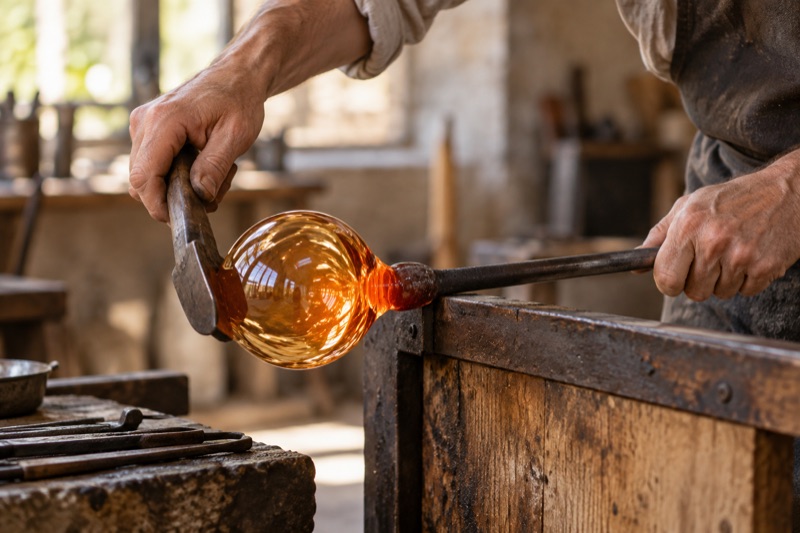
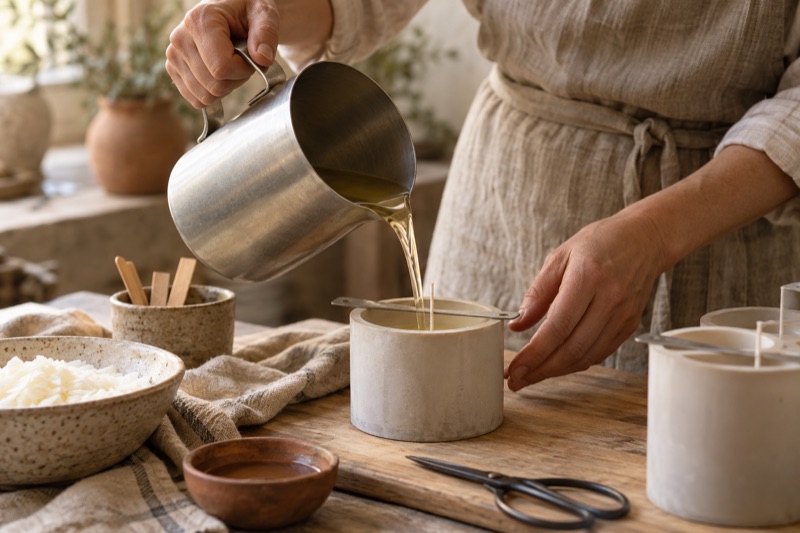
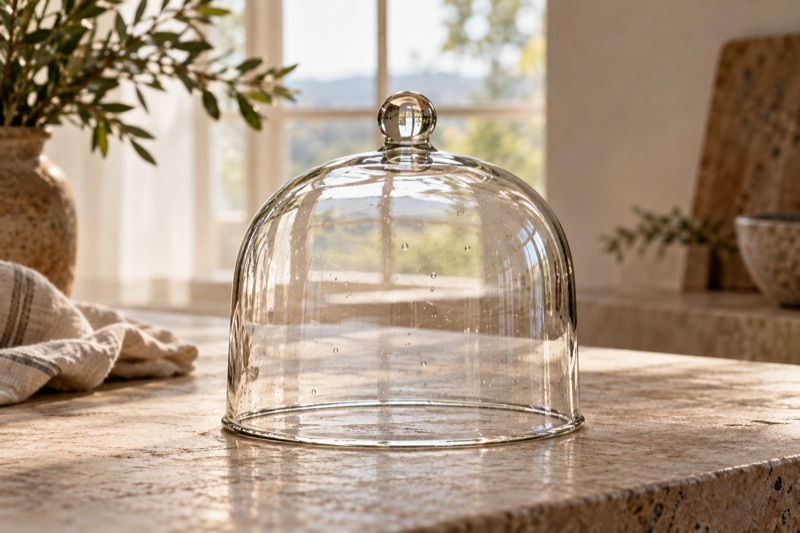
A state label is one kind of evidence. A maker's own account of the work is another, and a different kind of claim. Le Bonne Pomme is hand-poured soy and beeswax, hand-painted one by one, and presented under a handblown glass cloche. It is designed in France. Those are descriptions of work, not a state label. Our glossary of candle labels explains what each phrase promises, and how hand-blown glass is made covers the craft behind the cloche.
FAQ
What does EPV stand for? Entreprise du Patrimoine Vivant, or Living Heritage Company.
What does "patrimoine vivant" mean? Literally "living heritage." In the label it refers to a company's economic heritage, such as rare equipment, specific know-how and a long-standing site, that is still in use.
How many companies hold the label? About 1,300, according to the state's label page, updated April 2026.
How long does the label last? Five years, and it can be renewed.
Is the EPV the same as Meilleur Ouvrier de France? No. The EPV is a label for companies. Meilleur Ouvrier de France is a title for individuals, won through an exam.
Where is the list of EPV companies? The state publishes it as an open dataset, with each company's region, dates and website.
What does the EPV logo look like? The state's label page shows it. A logo alone doesn't prove the label is current, so check the end date on the list.