Several French brands have worked the same craft for generations, and each tells its own founding year. Below are fourteen houses in candles, glass and crystal, porcelain and faïence, silver and perfume, with the year each gives on its own website. It is a selection, not a ranking. The dates are the houses' own claims, and "oldest" depends on what you count.
What counts as a heritage house
Here, a heritage house is a business that has kept practicing a craft for generations and can say what it makes and where. We take each founding year from the house's own pages and say so, and within each craft the houses are listed alphabetically.
France also has an official label, Entreprise du Patrimoine Vivant (EPV). According to the French government's business site, its criteria cover rare equipment and tools, traditional or highly technical know-how, and an established location or well-known name, and about 1,300 companies hold it. Our guide to the EPV label explains it, and we haven't checked which of the houses below hold it.
Candles and wax
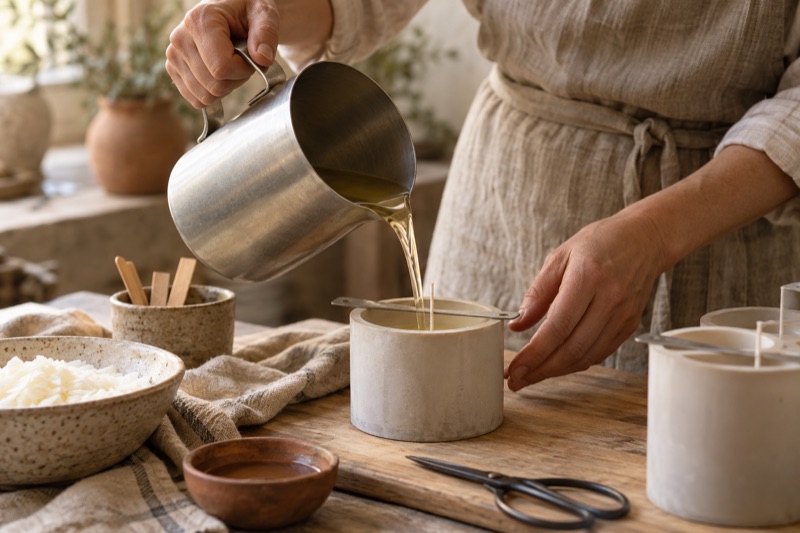
- Rigaud, 1852. Rigaud says its history began in 1852, when Jean-Baptiste Rigaud left the Auvergne for Paris to work in perfume. Its Cyprès candle dates to 1959, it says, in a soft-wax formula that Mario Rigaud patented.
- Trudon, 1643. Trudon dates its story to 1643, when Claude Trudon became the owner of a shop on rue Saint-Honoré in Paris selling spices and candles. Its timeline adds that its manufacture at Antony, south of Paris, became a Royal Manufacture in 1719 and that its scented candles date to 2007. More in our history of candles in France and our guide to French candle brands.
Glass and crystal
- Baccarat, 1764. Baccarat says it was born in 1764 in the village in eastern France that bears its name, and that in 1816 the house perfected a secret formula for crystal of unparalleled purity.
- Saint-Louis, 1586. Saint-Louis says it was born in 1586 as the Müntzthal glassworks, became a royal glassworks by letters patent of Louis XV in 1767 and has made only crystal since 1829. It says its crystal is mouth-blown, hand-cut, hand-engraved and hand-decorated at Saint-Louis-lès-Bitche, in Moselle, and that it has belonged to the Hermès group since 1995.
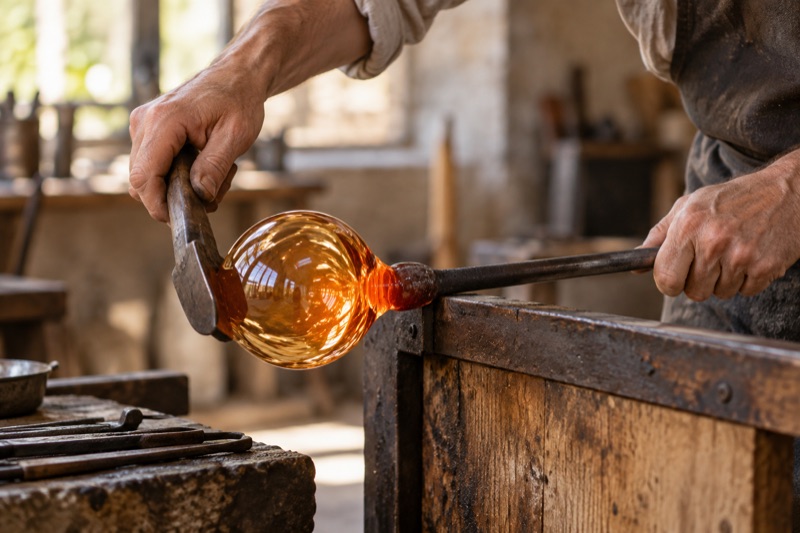
The glass side of the craft is the subject of how hand-blown glass is made.
Porcelain and faïence
- Bernardaud, 1863. Bernardaud calls itself Limoges porcelain since 1863. In its account, two Limoges industrialists opened a porcelain factory that year, and Léonard Bernardaud, an apprentice there, later became a partner. It says Limoges has the kaolin, fresh water and forests that porcelain needs.
- Gien, 1821. Gien says it has been a French earthenware manufacturer since 1821. Its site describes fine earthenware, and says that for its hand-painted collections the outlines are printed by hand from engraved copper plates before the piece is painted.
- Henriot-Quimper, 1690. The faïencerie says it was created in 1690. It says it makes its faïence by hand, from forms to freehand decoration, with a distinctive brushstroke technique, and it also makes monochrome sculpted figures, the Blancs de Quimper. For the craft, see our short guide to French faïence.
- Sèvres, 1740. The Manufacture de Sèvres says it has worked since 1740. It is a public institution under the Ministry of Culture and says about 120 on-site ceramists master some thirty specialized trades.
Silver
- Christofle, 1830. Christofle describes itself as founded by Charles Christofle in 1830. It says it makes table art, jewelry and home accessories.
- Odiot, 1690. Odiot calls itself a goldsmith since 1690 and says its methods and techniques have remained practically unchanged since the eighteenth century.
- Puiforcat, 1820. Puiforcat says it has worked since 1820, from a union of the Fuchs and Puiforcat families. It names the 1920–1945 Art Deco period under Jean Puiforcat as a turning point and says it joined the Hermès group in 1993.
Perfume
- Fragonard, 1926. Fragonard says it was founded in Grasse in 1926 as a small artisan perfumery distilling local flowers and plants, and that it has been passed down through four generations.
- Molinard, 1849. Molinard describes itself on its home page as a perfume creator in Grasse since 1849, run across five generations.
For the Grasse side of the trade, see the flowers of Grasse, and for the people who compose a scent, what a perfumer does.
One group holding several
Hermès, 1837. Hermès describes itself on its corporate site as "contemporary artisans since 1837", with six generations of artisans. Two houses above, Saint-Louis and Puiforcat, say they belong to its group.
What they share
Most tie their craft to a place. Baccarat names its village, Saint-Louis its Moselle site, Bernardaud the kaolin country around Limoges, and Fragonard and Molinard Grasse.
Many describe hand work as the core: mouth-blown crystal, freehand brushwork at Quimper, hand-painted collections at Gien, methods at Odiot that it says are practically unchanged since the eighteenth century. Those are the houses' words, so check what a label means before you rely on it, as our guide to candle labels does for wax.
A founding year can count different things. Trudon's 1643 is a shop that sold spices and candles, and its royal manufacture came later. Saint-Louis's 1586 is the Müntzthal glassworks, and its royal title came in 1767. Bernardaud's 1863 is a factory opened by two industrialists before the Bernardauds became partners. Ask what a date is counting before you compare it with another.
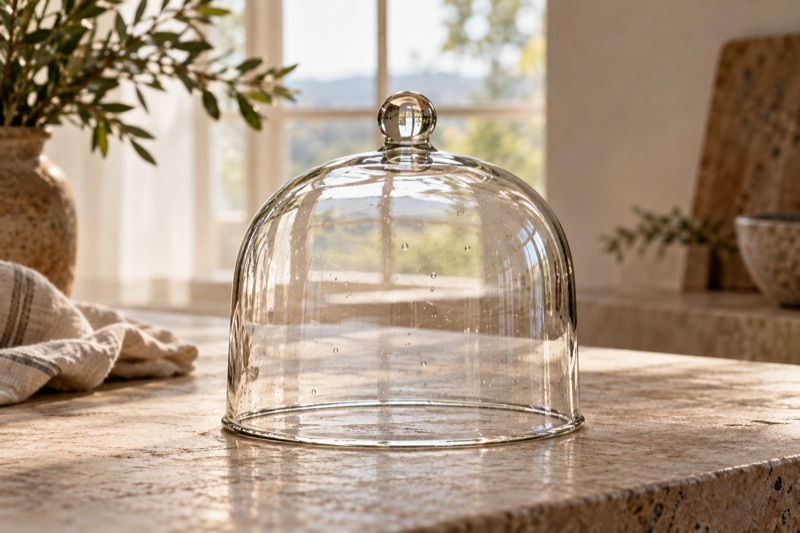
Le Bonne Pomme, designed in France, is built from three of these materials: hand-poured soy and beeswax, a handblown glass cloche, and a fragrance by Mane, the French fragrance house founded in 1871. Displayed under its cloche, it is designed to scent a room without being lit. It can be lit, but isn't meant to be: the painted finish will melt and the wax may drip, which is not a defect. For the wider picture, see our guide to French savoir-faire.
FAQ
What is the oldest French brand? There is no official ranking, and houses date themselves by different events: a shop, a factory, a family's start or a royal title. This page doesn't name an oldest house.
What is a heritage house? A business that has practiced a craft for generations. France's official label, the EPV, looks at rare know-how, equipment and an established location or name rather than age alone.
Are these houses still made by hand? Each house describes its own methods, and we report those descriptions. Several say they work by hand, such as Saint-Louis, Henriot-Quimper and Odiot. Gien describes both decal and hand-painted techniques, and Sèvres is a public institution that describes its on-site ceramists.