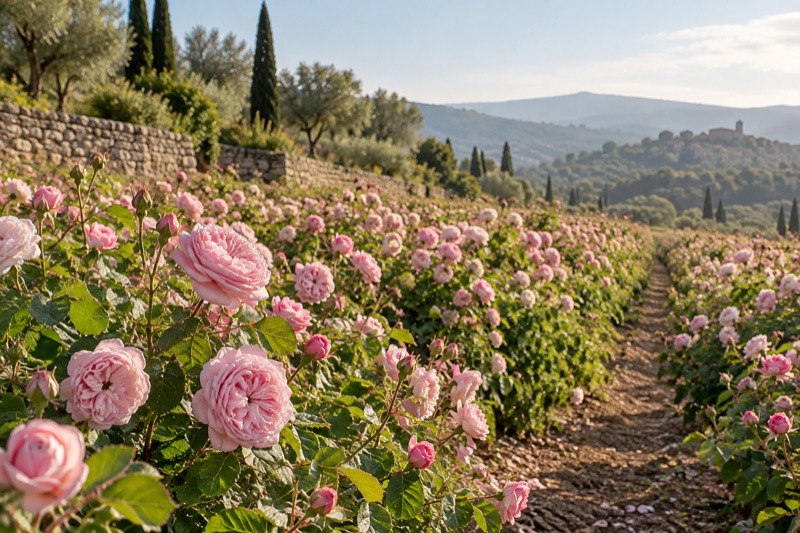
Rose de mai is Rosa × centifolia, the "May rose" named for its flowering month: a rose picked every morning for a few weeks from May into early June in the hills around Grasse. The flowers go straight to processing, where they're turned into an absolute, a concentrated aromatic extract that goes into perfumes. With jasmine and tuberose, it's one of the three flowers the Pays de Grasse tourist office calls the queens of perfumery.
This guide covers each main crop, why Grasse grew them, how the harvests run through the year, and how flowers like these reach a fragrance at home.
Why Grasse grows flowers
Grasse came to flowers through leather. Tanners and glove makers needed scent, and the town's setting could supply the plants. The Fragonard perfume museum cites southern sun, Mediterranean mildness, cool nights from the altitude and plentiful watercourses. Galimard, a Grasse perfumer, adds long sunshine, short rainy spells and fertile alluvial soil. Those are the trade's own explanations, not an agronomic study, but they agree.
By the Fragonard museum's account, jasmine was successfully planted in large fields around 1560, and rose de mai, tuberose and lavender gradually filled the landscape. UNESCO's 2018 listing of the skills related to perfume in Pays de Grasse names growing perfume plants as the first of three linked skills. The full story, from tanneries to today, is in Why Is Grasse the Perfume Capital of the World?
The fields are far smaller than they were. AFP reports that centifolia rose production fell from about 3,000 metric tons a year in the early 20th century to a record low of 59 metric tons in 2011, and has since recovered to about 120 metric tons. AFP calls that a niche production now.
Rose de mai
Rosa × centifolia goes by several names: cabbage rose, Provence rose, May rose and rose de mai, according to Wikipedia. It is a hybrid whose history isn't well documented.
In Grasse the harvest is short. One grower, Terre de Jasmin, says the rose is picked every morning for three to four weeks in May. Another, Domaine de Manon, gives four to six weeks from May into early June, depending on the sun. It says the flowers go to processing the same day, to keep their scent and freshness, and become the absolute used in Dior's perfumes. The tourist office lists centifolia growing in Grasse, Pégomas, Opio and La Colle-sur-Loup, with an Expo Rose in Grasse in May.
What does rose de mai smell like? Descriptions vary with the speaker, which is part of its appeal. Domaine de Manon calls the scent honeyed and peppery. Terre de Jasmin describes fruity notes with a slight lemon edge. A dsm-firmenich perfumer quoted by AFP says centifolia has a floral touch and a vegetal effect with a hint of spice, while the Damask rose grown in bulk in Turkey, Bulgaria and Morocco is more honeyed, almost liqueur-like. AFP adds that Chanel and Dior use centifolia in their historic fragrances, so swapping in Damask was never an option.
Rose de mai absolute, like any absolute, comes from solvent extraction or, traditionally, enfleurage. Wikipedia describes) the solvent route in two steps: a hydrocarbon solvent first yields a waxy concrete, and ethanol then separates the absolute from it. How Perfume Is Made walks through that and the other extraction methods.
Jasmine
Jasminum grandiflorum, known as Spanish or royal jasmine, is native to South Asia, the Arabian Peninsula, East and Northeast Africa and parts of China, Wikipedia says. That makes Grasse's jasmine an introduction, and the Fragonard museum dates its successful planting in large fields to around 1560.
Jasmine works to a different clock than the rose. Domaine de Manon says the hot, humid summers let the flowers open every night from August to October, and that pickers gather them from dawn to midday with delicate movements, before they're taken straight to be made into absolute. Terre de Jasmin gives July to October and says the flowers are picked at first light to keep all their notes. Reuters described the harvest on the Mul family's fields at Pégomas, where jasmine is harvested by hand, as a delicate annual ritual.
Chanel's perfumer Olivier Polge told the Globe and Mail that Grasse jasmine is fresher, maybe a little greener, with a slight tea note, compared with jasmine of the same species grown in Egypt. The difference, he said, comes down to climate, soil and perhaps the farmers.
Jasmine is also the crop that moved abroad. The International Perfume Museum says property development between 1970 and 1980 took farmland, and jasmine growing moved to Egypt's Nile Delta and then southern India, which it says supply 90 percent of the world's jasmine. Chanel's partnership with the Mul family, which the Globe says dates to 1987, keeps some jasmine growing in Grasse. The tourist office lists a Fête du Jasmin in Grasse in August.
Tuberose
The tourist office describes tuberose as having a very rich, honeyed scent, among the most powerful in the plant kingdom and one of the most expensive extracts available to a perfumer. Polianthes tuberosa is believed to be native to central and southern Mexico, according to Wikipedia, and it's one of the five crops the Globe and Mail says Chanel's Pégomas fields grow.
Its flowers open at sunset. Terre de Jasmin says they are picked at night between August and October, while the tourist office's flower page lists September to November.
Historically, the most fragile flowers, jasmine and tuberose among them, were captured by enfleurage, in which flowers lie on a layer of odorless fat that absorbs their scent without heat. Galimard calls it the oldest method and almost forgotten today. How Perfume Is Made explains it.
Other crops
Beyond the big three, the tourist office lists five more perfume flowers, and growers and perfumers name others:
- Mimosa. A winter flower, grown on the hills of Pégomas and Auribeau-sur-Siagne, with a Fête du Mimosa in Pégomas in January.
- Violet. Associated with the village of Tourrettes-sur-Loup, which holds a Fête des Violettes in February.
- Neroli. The precious essence taken from the blossom of the bitter-orange tree, which the tourist office places on the hills around Grasse.
- Iris. Grown on Grasse's hills and prized for a rare, refined essence.
- Lavender. A July flower the tourist office says is mainly grown on the Valensole plateau, with some at Gourdon and Gréolières-les-Neiges. See Lavender Season in Haute-Provence.
- Rose geranium. One of the five crops the Globe says Chanel's fields grow, and a plant Galimard distills.
The harvest calendar
| Flower | Season, per the tourist office | Notes |
|---|---|---|
| Mimosa | January to February | Pégomas, Auribeau-sur-Siagne |
| Violet | February to March | Tourrettes-sur-Loup |
| Neroli (bitter-orange blossom) | March | Hills around Grasse |
| Iris | April | Hills of Grasse |
| Centifolia rose (rose de mai) | May to June | Picked each morning, growers say; Expo Rose in May |
| Lavender | July | Mainly the Valensole plateau |
| Jasmine | August to October | Picked from dawn, growers say; Fête du Jasmin in August |
| Tuberose | September to November | Picked at night, one grower says |
Treat the months as a guide. Individual sources differ by weeks. Terre de Jasmin lists jasmine from July and tuberose from August, Galimard lists orange flowers from late April to early June, and the rose harvest runs three to six weeks depending on the grower and the sun. Weather moves each season, so check with a grower or the tourist office before planning a trip. Two growers, Domaine de Manon and Terre de Jasmin, list visits or picking sessions during bloom. For a practical plan, see What Perfumes Are Made in Grasse?
You can also smell the plants without the harvest. The International Perfume Museum's gardens in Mouans-Sartoux are a conservatory of perfume plants that includes centifolia rose, jasmine, tuberose, lavender, geranium and orange blossom.
Grasse flowers at home
A flower on a fragrance's notes list describes what you smell, not necessarily what went in. For some notes, nothing can be pressed or distilled at all: the fragrance encyclopedia Osmoz says essential oil can't be extracted from apples, so perfumers build the note from other ingredients. Our guide to how fragrance notes work explains the tiers.
Le Bonne Pomme lists its notes as crisp apple skin, melon and peach at the top, rose and red berries at the heart, and caramel, musk and wood at the base. Rose sits in the heart. That's a note, not a statement about which rose, field or country supplied it. The fragrance is by Mane, the French fragrance house founded in 1871.
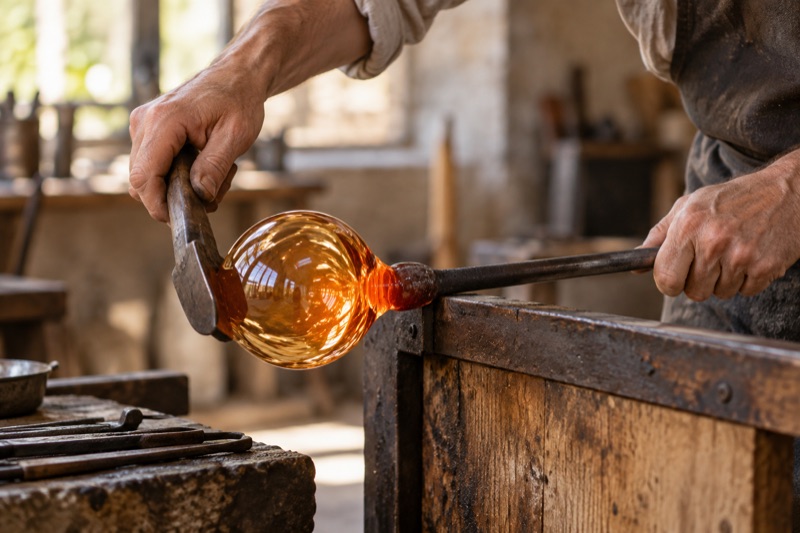
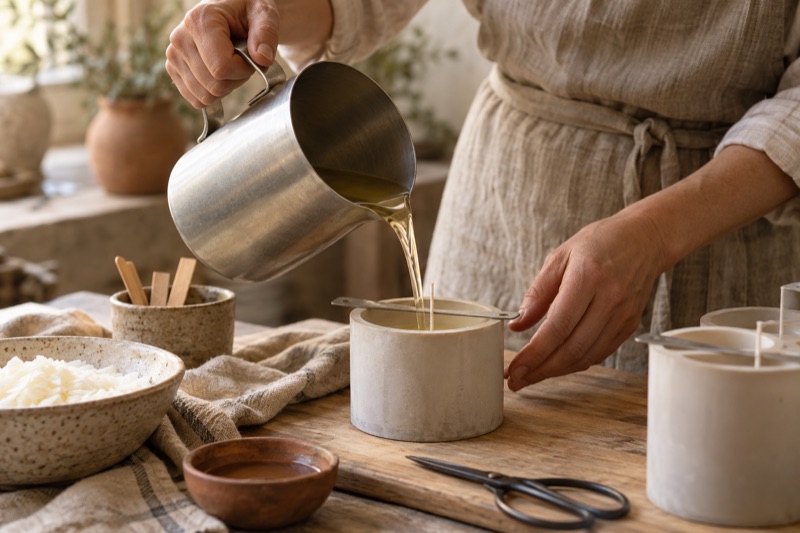
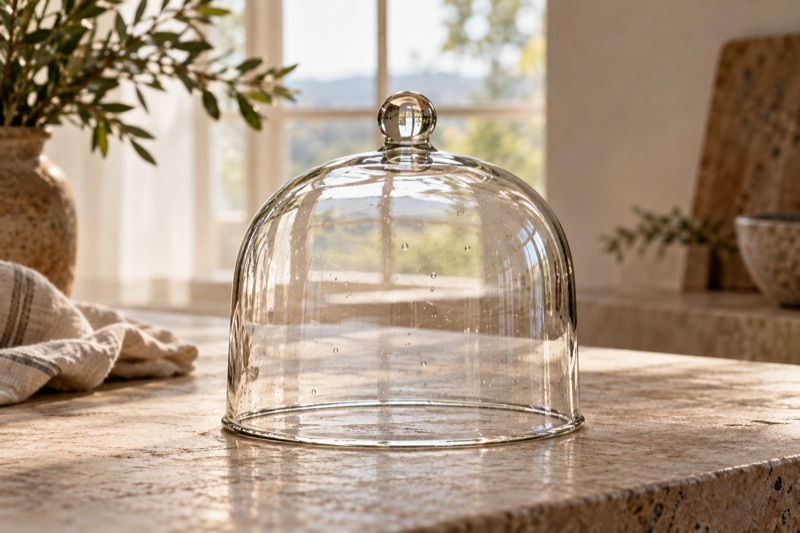
The apple is hand-poured soy and beeswax, hand-painted one by one and presented under a handblown glass cloche. Displayed under its cloche, it scents a room without being lit, for about 60 days, depending on room size. It can be lit, but isn't meant to be: the painted finish will melt and the wax may drip, which is not a defect. For the crafts behind the object, see what "hand-poured" means and how hand-blown glass is made. The wider French tradition they belong to is in French Savoir-Faire: What It Means, and Where to Find It.
FAQ
What is rose de mai? It's Rosa × centifolia, called rose de mai for the month it flowers. In the Pays de Grasse it's picked each morning for several weeks from May into early June and processed into an absolute for perfumery.
What does rose de mai smell like? Sources differ: honeyed and peppery, fruity with a hint of lemon, or floral and vegetal with a trace of spice. A perfumer quoted by AFP sets it apart from the more honeyed, liqueur-like Damask rose.
What is Grasse jasmine? Jasminum grandiflorum, grown in Grasse and picked by hand at dawn through late summer and early autumn. Its flowers open at night. Chanel's perfumer describes it as fresher and a little greener than Egyptian jasmine of the same species.
When is the Grasse rose harvest? In May, running into early June depending on the grower and the weather.
When is the jasmine harvest in Grasse? The tourist office lists August to October. Some growers start in July.
Is tuberose grown in Grasse? Yes. The tourist office lists it among the crops of the region, and the Globe and Mail says it's one of the flowers grown for Chanel at Pégomas.