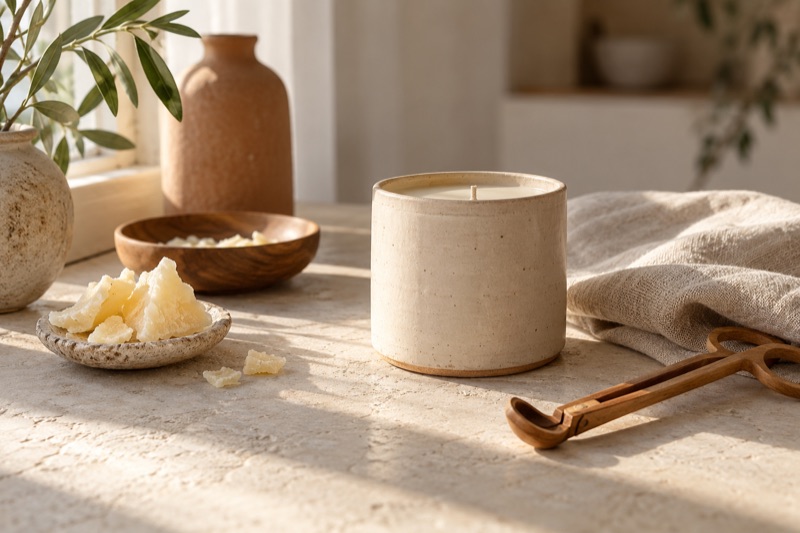
What makes a candle luxury comes down to a few things you can check: who composed the fragrance, what the wax is, how the vessel or object is made, how much of the work is done by hand, and whether the candle has been tested. Heritage, packaging and the price itself aren't on that list, because none of them tells you what is in the candle.
"Luxury" is a word brands apply to themselves. The US Federal Trade Commission's rule for advertising is that claims must be truthful and not misleading, which leaves the reader to judge what a claim is worth. Here is what costs money, what is mostly branding, and a fair answer on whether it's worth paying for, with the published facts of our Le Bonne Pomme as the example.
What you're paying for
| Costs real money, and you can ask for proof | Mostly branding, and you can't check it |
|---|---|
| A fragrance composed by a perfumer, for candle use | A heritage story with no link to the candle's contents |
| A wax with a known composition | Adjectives such as "luxe," "artisan," "curated" |
| A vessel or object made with skill | Box, ribbon and unboxing |
| Handwork, described specifically | A high price on its own |
| Testing you can read |
The fragrance
The scent is often composed with a fragrance house rather than by the candle brand alone. The National Candle Association (NCA), the US candle trade group, says candle makers work closely with fragrance companies, and that a well-made candle contains only fragrance materials approved for candle use. It also says the amount added should be carefully monitored.
The expertise is scarce. The International Fragrance Association (IFRA) says fewer than a thousand fully qualified perfumers work worldwide, and that they train for about seven to ten years. Fragrance Houses, Explained covers who the houses are and what to ask a brand.
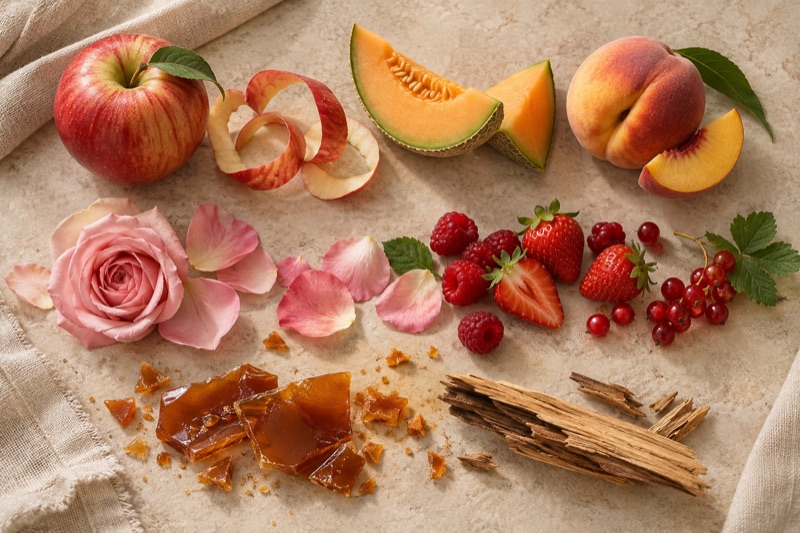
Le Bonne Pomme's fragrance is by Mane, the French fragrance house founded in 1871. By its own account, Mane began that year as V. MANE FILS, created by Victor Mane. The scent opens on crisp apple skin, melon and peach, with rose and red berries at the heart and caramel, musk and wood at the base. How to Read Fragrance Notes explains the structure.
A house's history tells you who composed the scent. It doesn't tell you whether you will like it. The fair test is to ask who made the fragrance and whether it was composed for the product.
The wax
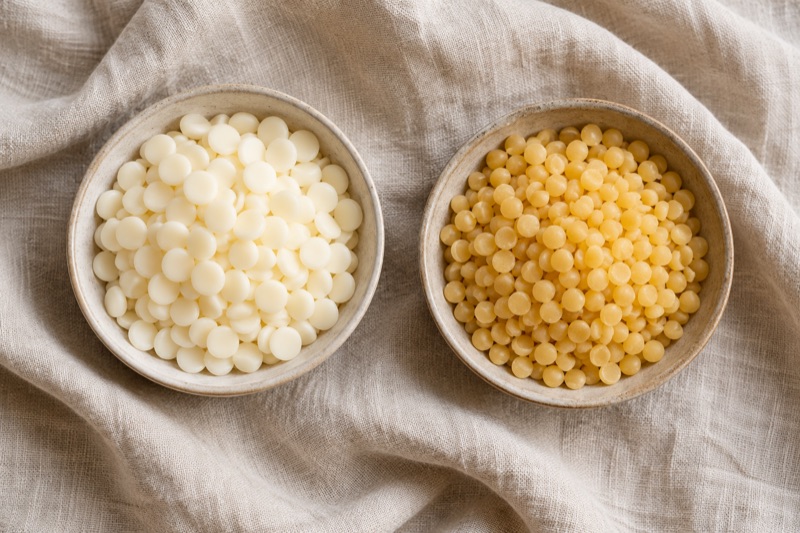
Wax is a real input, and the choices differ in cost. At one US supplier, CandleScience, a 1-lb bag of a common container soy cost $3.96 in October 2026, and a 1-lb bag of white beeswax cost $12.20, about three times as much. Both fall in bulk, so treat the figures as a comparison, not a price list.
Beeswax is also easy to dilute. The UN's Food and Agriculture Organization says adulteration with cheap paraffin is easy, and that detecting it needs chemical tests. A wax claim on a label is only as good as the maker's word, so a brand that names its wax is giving you something to hold it to. Le Bonne Pomme is hand-poured soy and beeswax. Soy vs Beeswax Candles, and the Case for Blending explains how the two waxes behave.
The vessel or object
Many candles come in a container, and machine-made glass containers are the cheap default. The American Society of Mechanical Engineers says that once automatic bottle machines arrived in the early twentieth century, glass containers became a "cheap and plentiful supply." Free-blown glass is the older method, in which a glassworker inflates and shapes the glass freehand, so the form depends largely on the worker's skill.
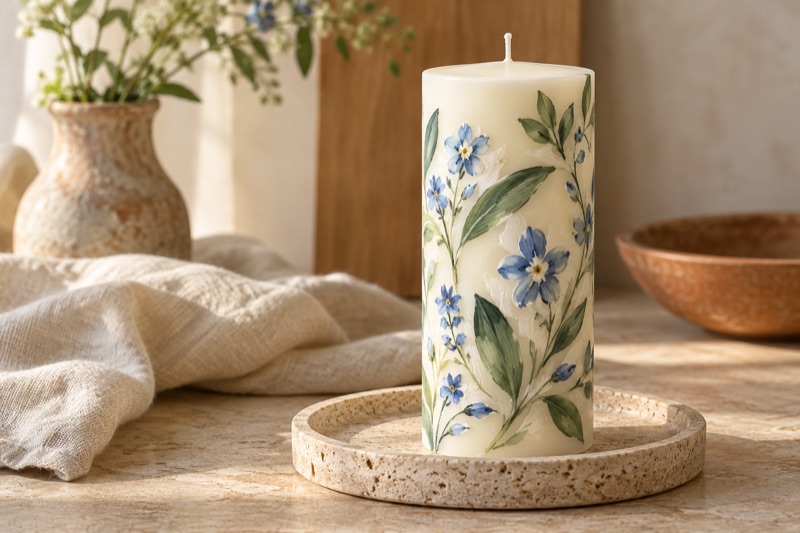
Le Bonne Pomme's glass is a handblown cloche. The candle under it is itself an object: a sculptural, apple-shaped candle of 50 g (1.76 oz). That changes what you're comparing. It isn't a jar with a wick. It's a piece designed to be displayed under its cloche. How Hand-Blown Glass Is Made walks through the craft.
Handwork
Handwork is a real cost, but the words describing it are loose. Le Bonne Pomme is hand-poured, hand-painted one by one and handcrafted one at a time, in small runs. Each phrase answers a different question: who poured the wax, who applied the color, how many were made at once. These are the brand's own descriptions, and Handmade, Hand-Poured, Small-Batch: What Candle Labels Mean shows how to read them and what to ask.
Hand-painting has a consequence you should know before you buy. A painted finish isn't meant for a flame, and Can You Burn a Painted Candle? explains why.
Testing and safety
A test report is evidence an adjective can't be. A public SGS report is available for Le Bonne Pomme, and Reading a Candle Safety Report explains what such reports cover.
Safety is a baseline, not an upgrade. The NCA says every candle should carry a cautionary label, and it recommends candles that follow the ASTM fire-safety standards, F2417 among them. A candle at any price should meet that baseline, and its price buys no exemption from the usual rules.
When a luxury candle is worth it
Worth is personal, and it depends on whether the parts that cost money are the parts you'll notice. A candle is likely worth the money when:
- You'll use it as it was made. A candle made to burn should burn, and a piece made to be kept should be kept. Le Bonne Pomme is designed for cold diffusion: displayed under its cloche, it scents a room without being lit, for about 60 days, depending on room size. It can be lit, but isn't meant to be: the painted finish will melt and the wax may drip, which is not a defect.
- You care about the scent itself. If you'll notice the difference between a composed fragrance and a generic one, that's the clearest part of the price you can see.
- You'll keep and display it. If the value is in the form and the finish, a candle you never burn keeps both.
- The brand tells you what it is. Named wax, a named fragrance house, clear instructions and a report you can read.
It's likely not worth it when:
- You burn candles as everyday light. The NCA advises using and replacing fragrant candles regularly, and a plainer candle with a clear label can do that job.
- The price rests on the story. If a brand can't tell you the wax, the fragrance source or the burn instructions, you're paying for adjectives.
- You want a candle to burn. Le Bonne Pomme can be lit but isn't meant to be, so it isn't the candle for that.
A candle doesn't have to be expensive to be safe or pleasant. It has to be what it says it is.
FAQ
Are luxury candles worth it? Sometimes. They are when you'll use the candle as it was made and the parts that cost money, such as the fragrance, the wax and the craft, are ones you'll notice. They aren't when the price rests on a story.
Why are candles so expensive? Real inputs differ: the fragrance, the wax (beeswax cost about three times as much as soy at one supplier), the vessel and the handwork. Packaging and branding add cost too, without changing what's in the candle.
What are luxury candles? "Luxury" is the brand's own word. In practice it usually points to a composed fragrance, better materials, a crafted vessel or object, and often handwork.
How much are luxury candles? There's no standard range, so we don't give one. A better question than the number is what the price buys, using the list above.
What should I look for in a luxury candle? The fragrance house, the wax, how the vessel or object is made, what is done by hand, whether the maker says if it's meant to be burned, and whether there's a test report.