The best decorative candle ideas treat a candle as an object first and a light second. Choose pieces for their shape and color, group them by height, give them a tray, a plinth or a cloche, and put them where the eye already goes: the mantel, the coffee table, a shelf, the edge of the bath. Then decide which candles you'll actually burn. Those need room around the flame, while the ones you keep for looking at need shelter from heat and sun.
This guide works through each step, then room by room, with seasonal changes at the end.
Candles as objects
A candle you don't burn is judged the way a vase or a bowl is: by its silhouette, its color, its surface and where it sits. That isn't a new idea. Victorians kept wax fruit and flowers under glass domes, a fashion traced in A Short History of Wax Fruit. Today the French candlemaker Trudon lists its wax busts of Marie-Antoinette and Napoléon under interior and decoration, not with its candles. Sculptural Candles: When a Candle Becomes an Object covers the category in full.
Before you style anything, sort your candles into two groups:
- Candles to burn: tapers, pillars, votives and container candles. Style these with clearance in mind. The National Fire Protection Association (NFPA) advises keeping candles at least 1 foot (30 cm) from anything that can burn.
- Candles to keep: carved, sculpted, painted or embellished pieces. Style these like ceramics, and keep them away from heat and strong sun. If you're not sure which group a piece belongs to, Should Decorative Candles Be Lit? walks through the signs.
Le Bonne Pomme belongs to the second group. It is an apple of hand-poured soy and beeswax, hand-painted one by one and presented under a handblown glass cloche. Displayed under its cloche, it scents a room without being lit. It can be lit, but isn't meant to be: the painted finish will melt and the wax may drip, which is not a defect.
If decorating candles at home means dressing the candle itself with ribbon, dried flowers, glitter or paint, keep that for candles you won't light. In 2025 the US Consumer Product Safety Commission recalled a candle whose ornaments were flammable.
Scale and grouping
Match the group to the surface. A single votive vanishes on a long mantel, and a fat pillar crowds a nightstand. As a starting point, let a group of candles fill about a third of the surface it sits on, and leave the rest for other objects and empty space.
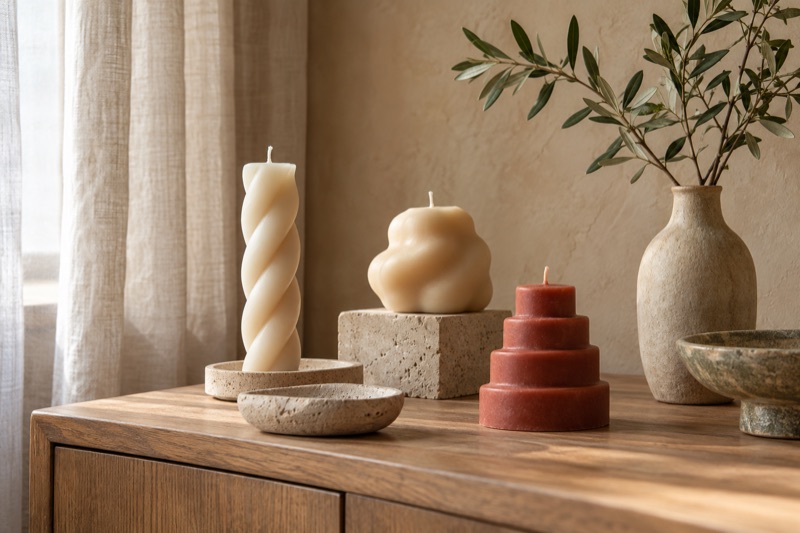
Group in odd numbers, at three heights. A tall taper, a mid-height pillar and a low sculptural piece read as one arrangement. Repeat one thing across the group, such as color, material or finish, and vary another, usually height. Change everything at once and the group looks accidental. Coffee Table Styling: The Rule of Three builds a whole table on this idea.
| Arrangement | How it looks | Where it works |
|---|---|---|
| Trio at three heights | Relaxed and collected | Coffee table, console, bath ledge |
| Row of matching pillars or tapers | Calm and formal | Mantel, dining table, sideboard |
| Matched pair | Symmetrical and traditional | Either end of a mantel or console |
| One sculptural piece | Quiet, like a gallery | Bookshelf, nightstand, entry table |
| Small containers on a tray | Abundant and casual | Coffee table, bathroom |
Corral small candles. Small canned candles for decoration, the tins and little jars, look scattered on their own. Gather them on a tray, turn the labels the same way or away, and keep the lids on when they aren't lit. A lid also keeps a candle's scent between burns.
Space lit candles farther apart. The National Candle Association (NCA) recommends keeping candles at least 3 inches apart so they don't melt each other. A group you'll light needs more room than a group you won't.
Bases, trays and cloches
A base tells the eye that a group is deliberate. It also gives you a way to move it, and to protect the furniture underneath.
- Trays gather a group into a single unit. Brass and pewter look formal, wood looks warm, and marble looks cool. For candles you light, the NCA advises a stable, heat-resistant surface, and the NFPA advises sturdy holders that won't tip, on an uncluttered surface.
- Plinths and risers lift a single piece so it reads as sculpture: a block of marble, a wooden riser, a short stack of books lying flat. Use books only under candles you don't light.
- Plates do the same job at a smaller scale: a faïence plate, a pewter charger or an old saucer under a pillar.
- Cloches suit unlit candles and wax objects. The glass keeps dust off a carved or painted surface and turns one piece into a display. Never put one over a lit flame. Cloche Decor Ideas has styling ideas by room, and How to Use a Candle Cloche covers the safety side.
If your taste runs to fewer, better objects, one good base under one good piece does more than a crowded tray. Parisian Apartment Style is built on that restraint.
On the mantel
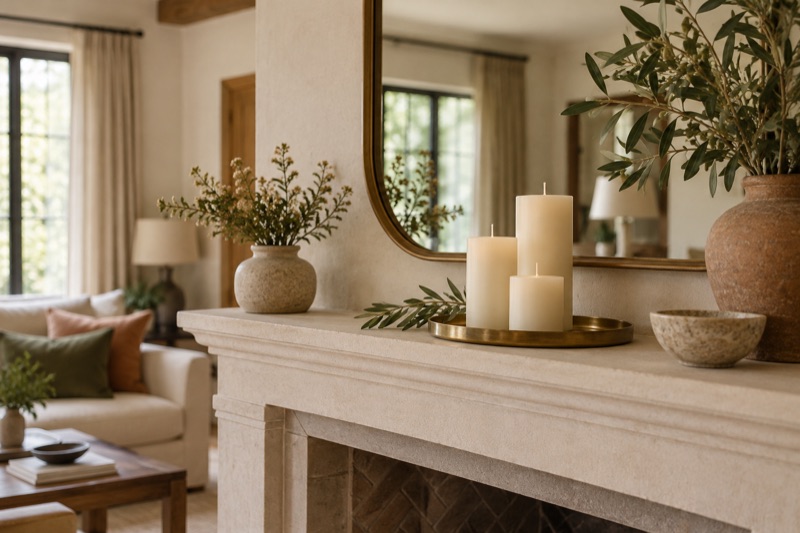
To display candles on a mantel, work in this order:
- Start with an anchor: a mirror or a painting, centered or set off to one side.
- Choose symmetric or asymmetric. A matched pair of candlesticks at either end looks traditional. A cluster at one end, balanced by a vase or a cloche at the other, looks more relaxed.
- Layer two or three heights. Put tall tapers near the anchor and lower pieces toward the ends.
- Add one thing that isn't a candle, such as branches in a jug, a bowl or a cloche.
- Take one thing away. A mantel almost always reads better with a gap.
Mantels collect greenery, garlands and dried flowers, so this is where lit candles need the most care. According to the NFPA, over half of all candle fires start when things that can burn are too close to the candle. Keep flames a foot from the garland, or use flameless candles, which the NFPA recommends using at home.
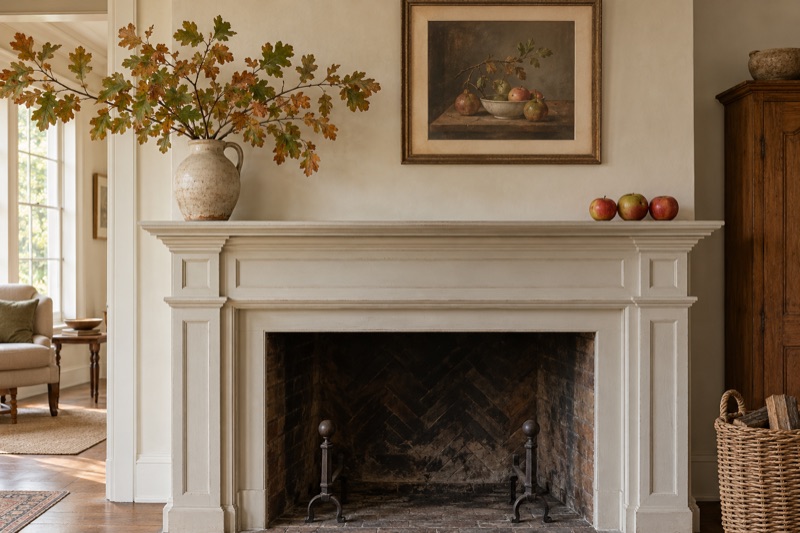
Decorative candles for the fireplace itself work best in one you don't use. A cluster of pillars at different heights on a tray fills an empty firebox. If you do light fires, keep wax out of the firebox and move wax pieces off the mantel while the fire is burning. Mantel Decor Ideas for Every Season has full arrangements, season by season.
On tables and shelves
Candle display ideas for the living room
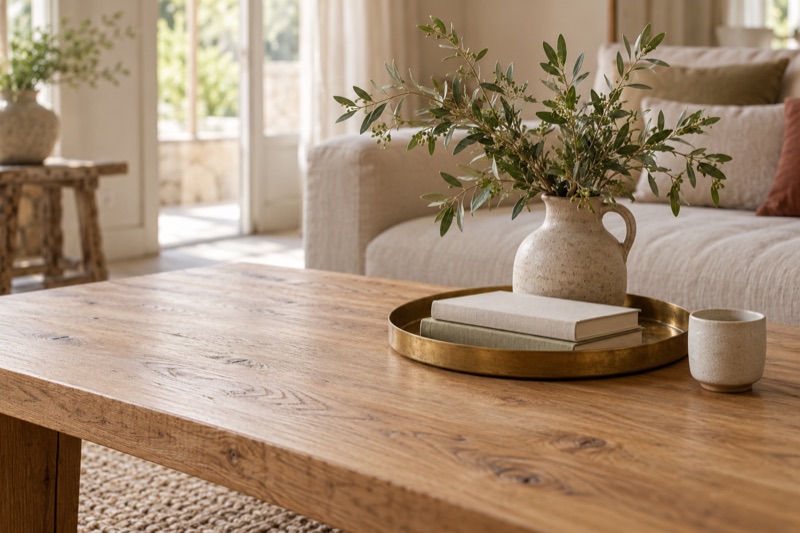
- Coffee table. Use a tray holding one tall candle, one low sculptural piece and something living or scented, with a stack of books beside it as a plinth for an unlit piece. Keep lit candles clear of books and magazines: the NCA lists books among the things to keep 12 inches from a flame.
- Side tables. One candle in a good holder beside the lamp is enough. The lamp does the lighting, and the candle sets the mood.
- Console behind the sofa. Scale up here, with a pair of tall candlesticks and a cloche or a bowl between them.
- Windowsills. These are better for glass and ceramics than for wax. The NCA warns that candles may fade in bright light, and it also advises keeping lit candles away from open windows, fans and vents.
Bookshelves
Keep shelves for candles you don't light. On a shelf of books, a flame rarely gets the 12 inches of clearance the NCA recommends. A single sculptural candle, or a small cloche set between rows of books or on a stack lying flat, breaks up the spines. Bookshelf Styling Ideas That Don't Look Staged covers spacing and rhythm.
The dining table
Use unscented tapers on the table, and keep scented candles in the next room so they don't compete with the food. Keep the candles either well above eye level or well below it, as with tall tapers or low votives, so guests can see each other. For long tables, including decorative candles for a wedding, a run of tapers in mixed brass holders down the center works well, with flowers kept a foot back from the flames.
The bedroom
Here the advice is plain. The NFPA advises against candles in the bedroom and anywhere people may fall asleep, and notes that more than one-third of home candle fires started in the bedroom. Put an unlit sculptural candle or a flameless one on the nightstand instead.
In the bath
Bathrooms are small, so one or two pieces are enough. Try a sculptural candle on a small marble dish on the vanity, a trio of low candles on a bath tray, or a cloche on a shelf. Keep wax objects out of the spray from the shower.
If you light candles by the tub, keep them a foot from towels, robes and the shower curtain, and put them out whenever you leave the room, as the NFPA advises. The same tip sheet warns against candles anywhere people may fall asleep, and a long, warm bath can be one of those places. For flickering light by the water, flameless candles are the simpler choice.
Seasonal changes
Keep the base and the arrangement, and change the candles and what sits around them.
- Autumn: amber, ochre and deep green, beeswax tapers, and apples, pears or a quince beside a wax fruit. In a room that leans French country, pair them with earthenware and worn wood. What Is French Country Decor? explains the look.
- Winter: white and cream tapers, brass and evergreen. The NFPA notes that December is the peak month for home candle fires, so keep greenery a foot from any flame, or use flameless candles in garlands.
- Spring: pale wax, clear glass and blossom branches. Put the heavier pieces away.
- Summer: fewer candles, and move wax off sunny sills.
When you put candles away for the season, the NCA advises storing them in a cool, dark and dry place, with tapers laid flat so they don't warp.
A few pieces can stay out all year. Le Bonne Pomme looks like autumn fruit in October and a still life in June. Displayed under its cloche, it scents a room without being lit for about 60 days, depending on room size. Keep it out of direct sunlight and away from heat sources whatever the season.
FAQ
How do you decorate candles at home? In styling terms, treat them as objects: choose a few good shapes, group them at three heights on a tray or plinth, and put them where the eye already lands. If you mean decorating the candle itself with ribbon, flowers or paint, keep that for candles you won't light.
How do you display candles on a mantel? Start with a mirror or a painting. Choose a symmetric or asymmetric layout, layer candles at two or three heights, add one object that isn't a candle, then take one thing away. Keep any flame at least a foot from greenery and garlands.
What are good candle display ideas for a living room? A tray of three candles at different heights on the coffee table, a single candle beside a lamp, a pair of candlesticks on the console, and an unlit sculptural piece or a cloche on a shelf.
Can you mix candles you burn with candles you don't? Yes, in the same room. Keep them in separate groups, though: lit candles need clearance and a heat-resistant base, and unlit pieces need protection from heat and sun.
Where shouldn't you put candles? Don't put lit candles in a bedroom, on a bookshelf, near curtains, or in a draft from a window, fan or vent. Keep unlit wax off sunny windowsills, away from radiators, and off the mantel when the fire is lit.